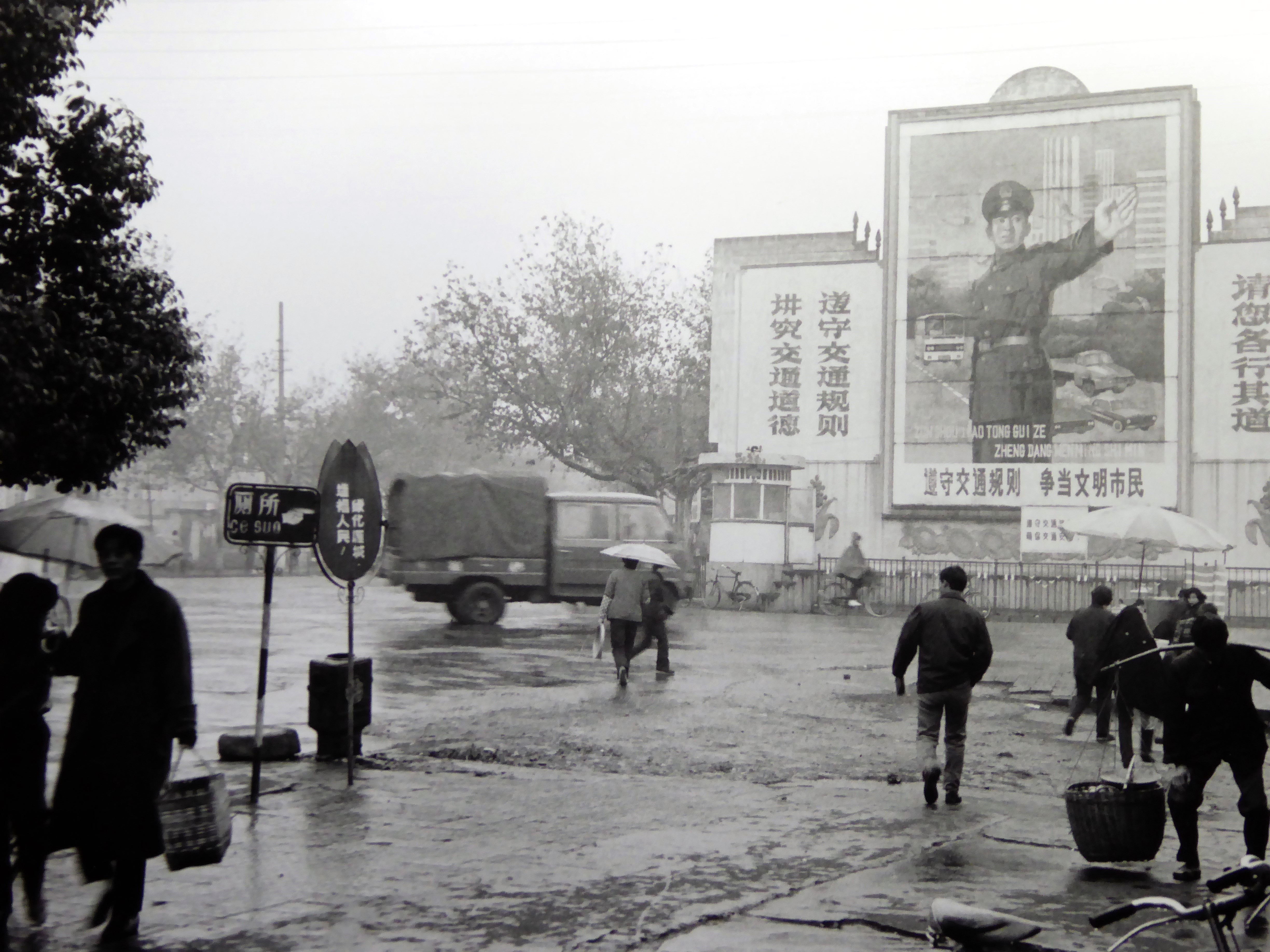
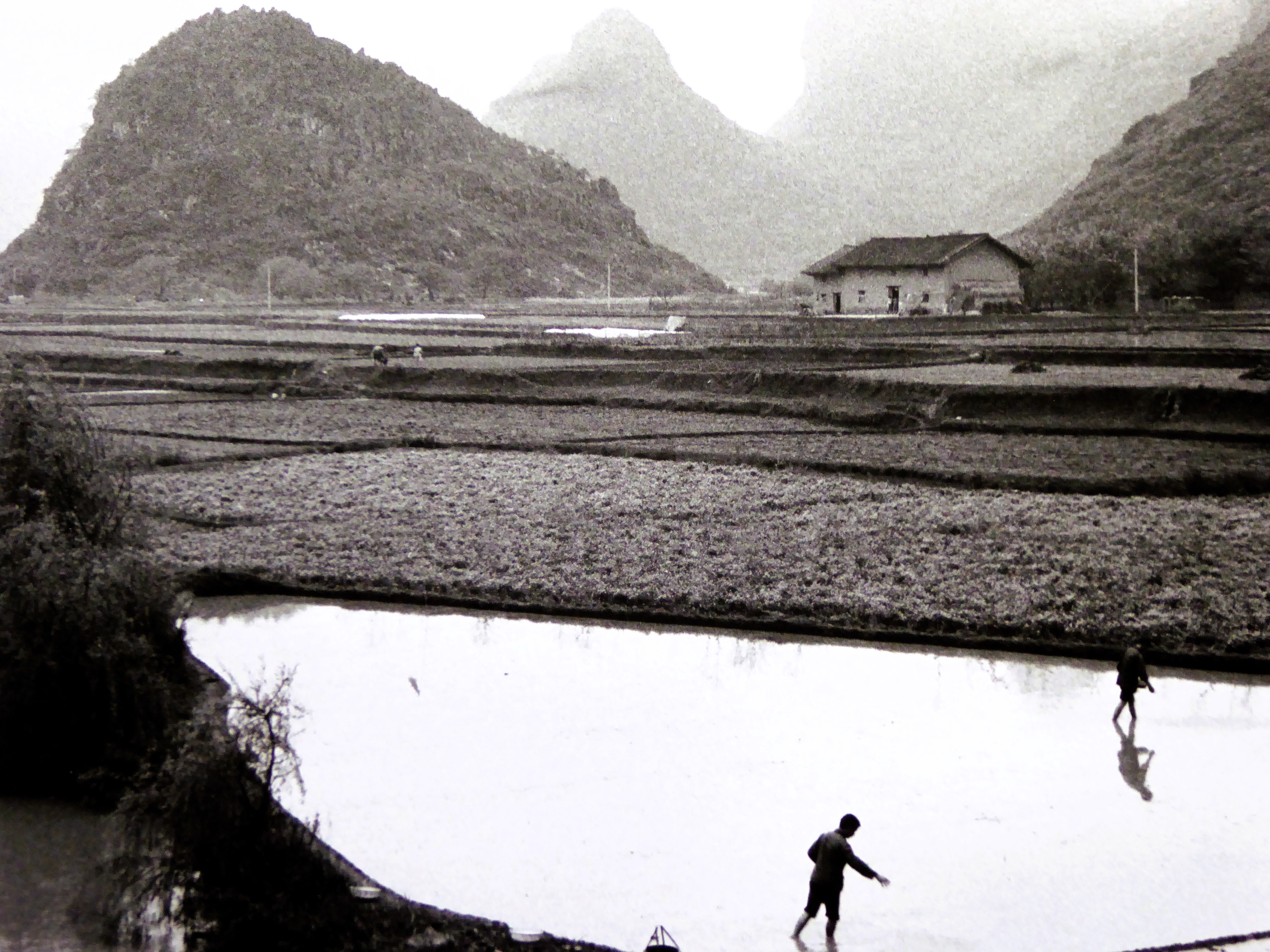
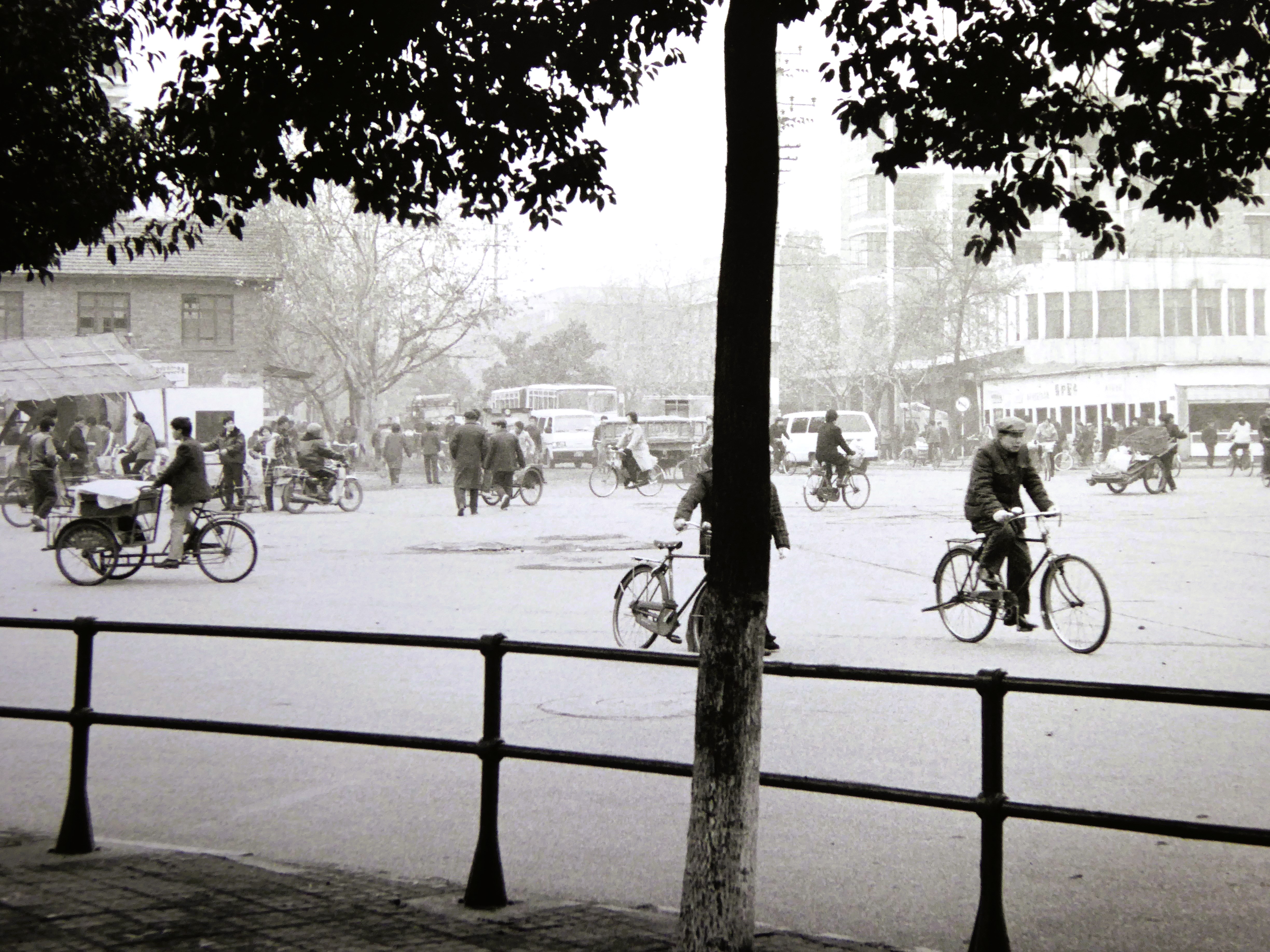
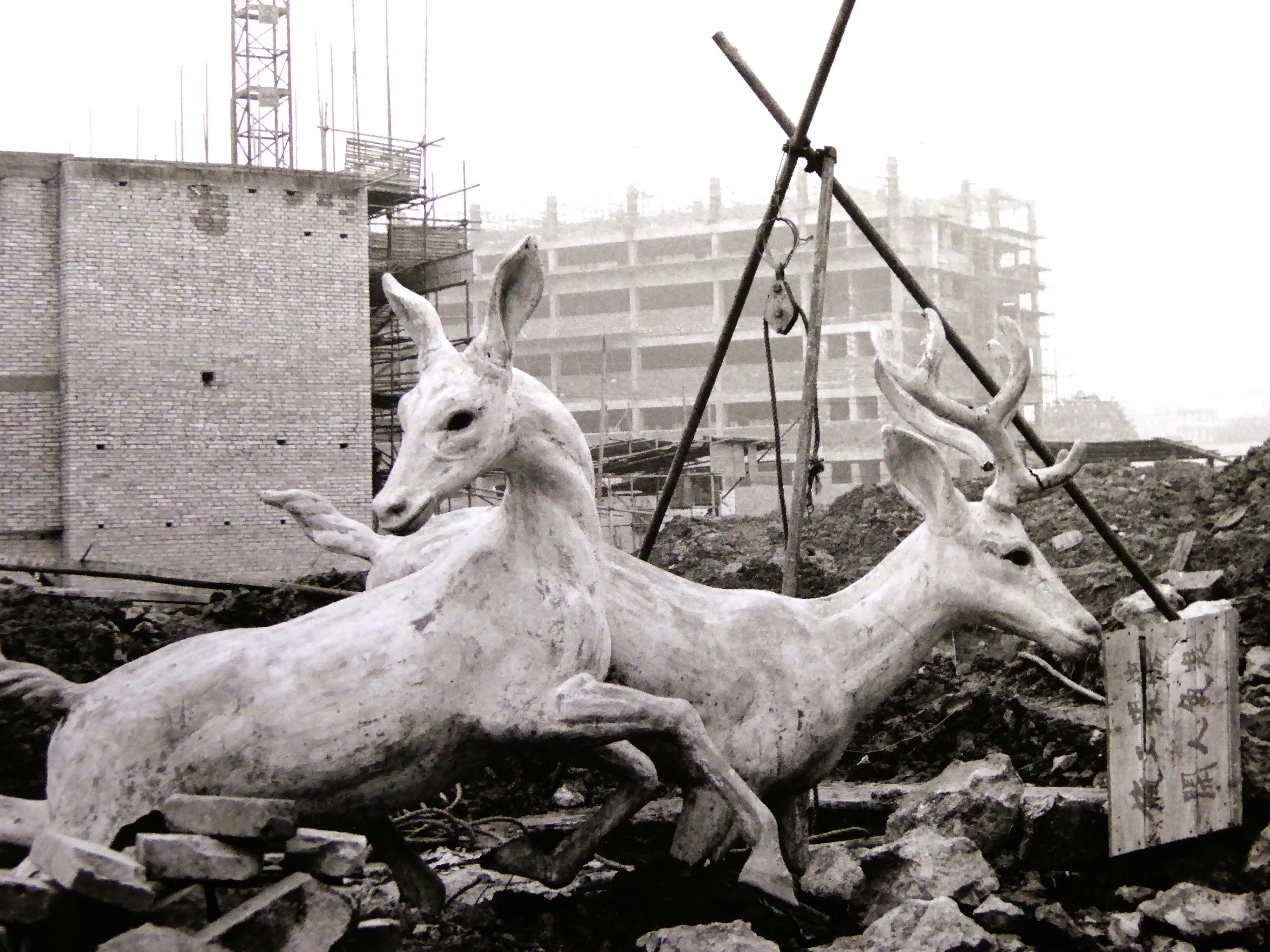
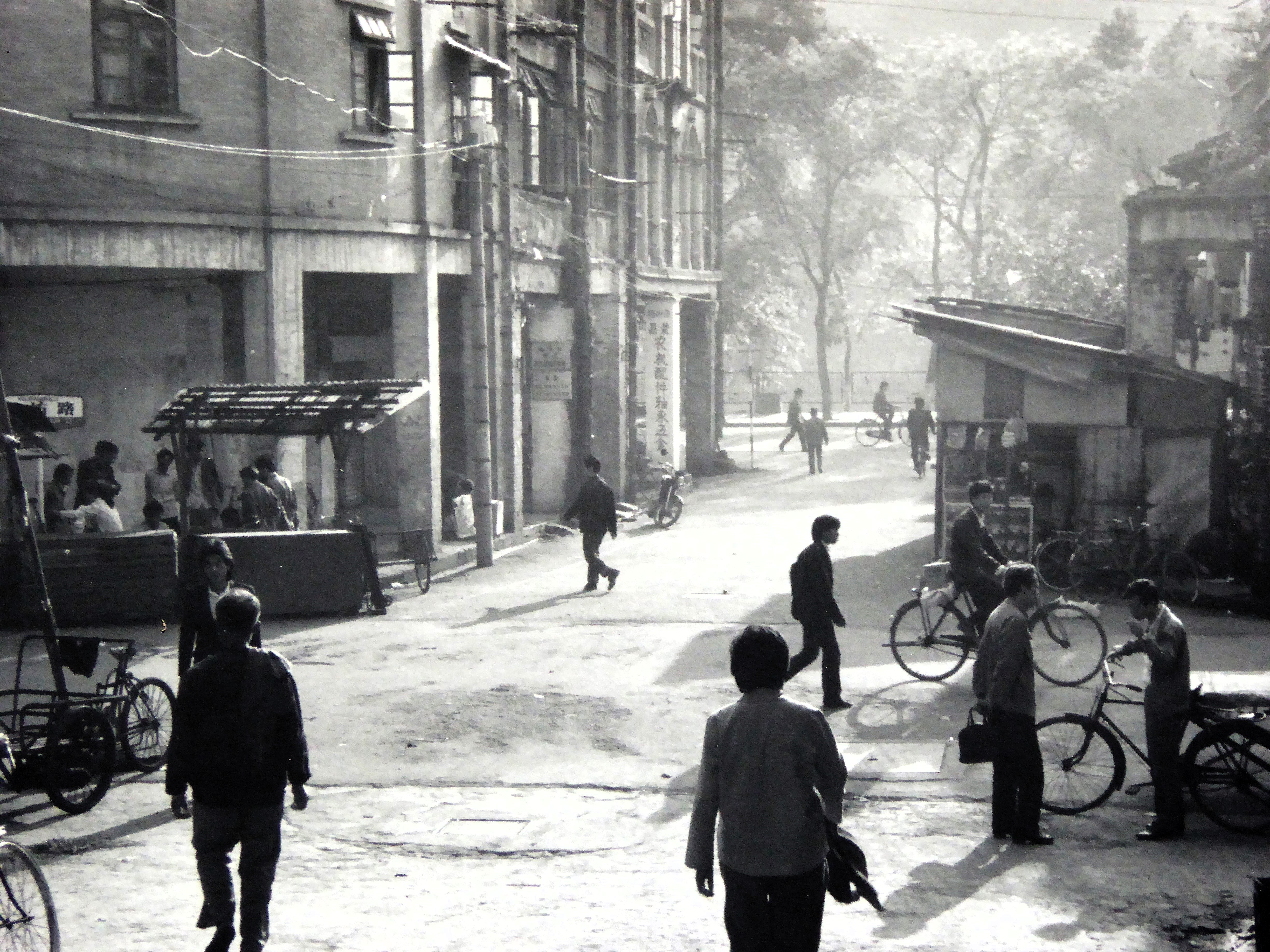
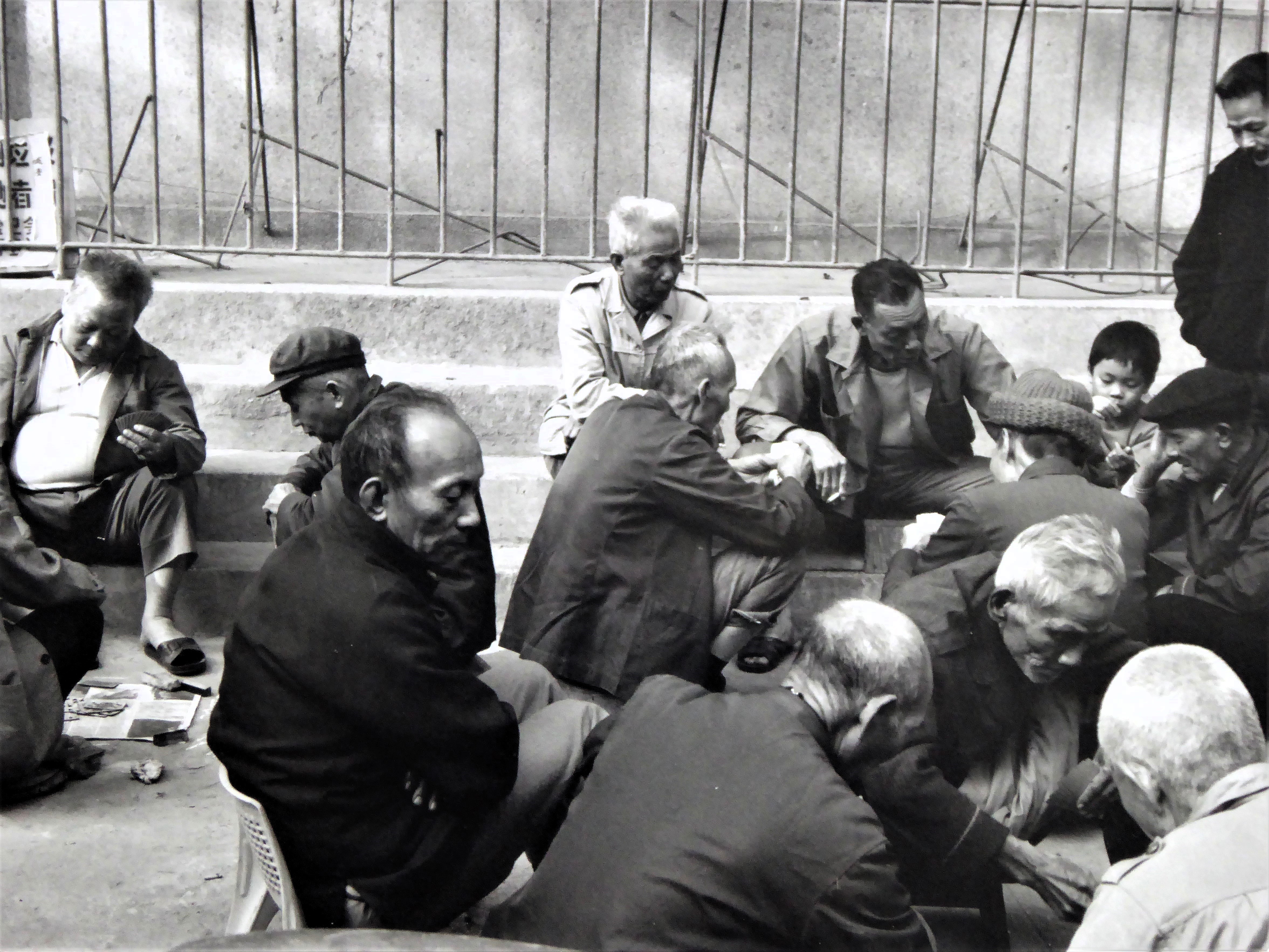
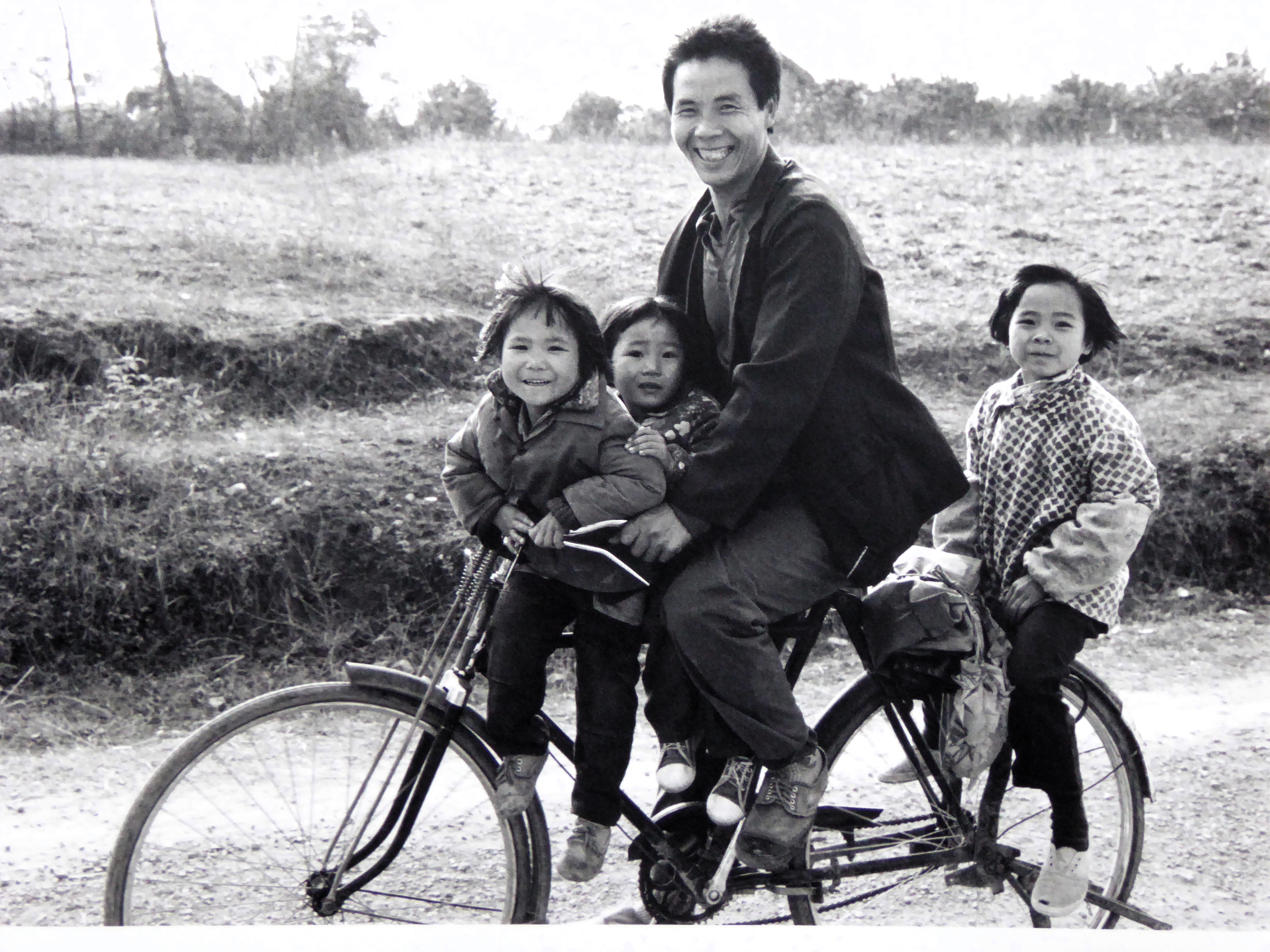
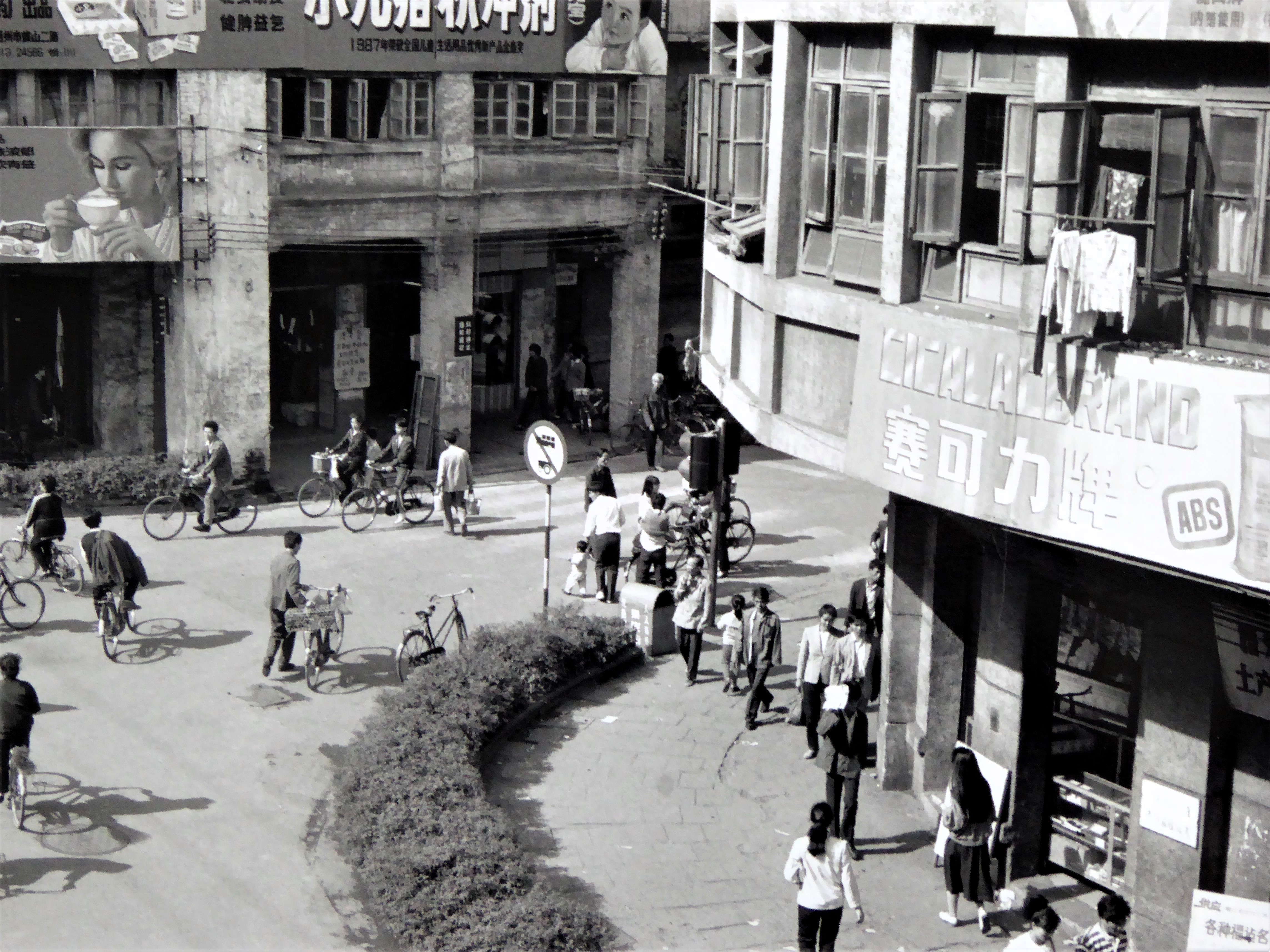
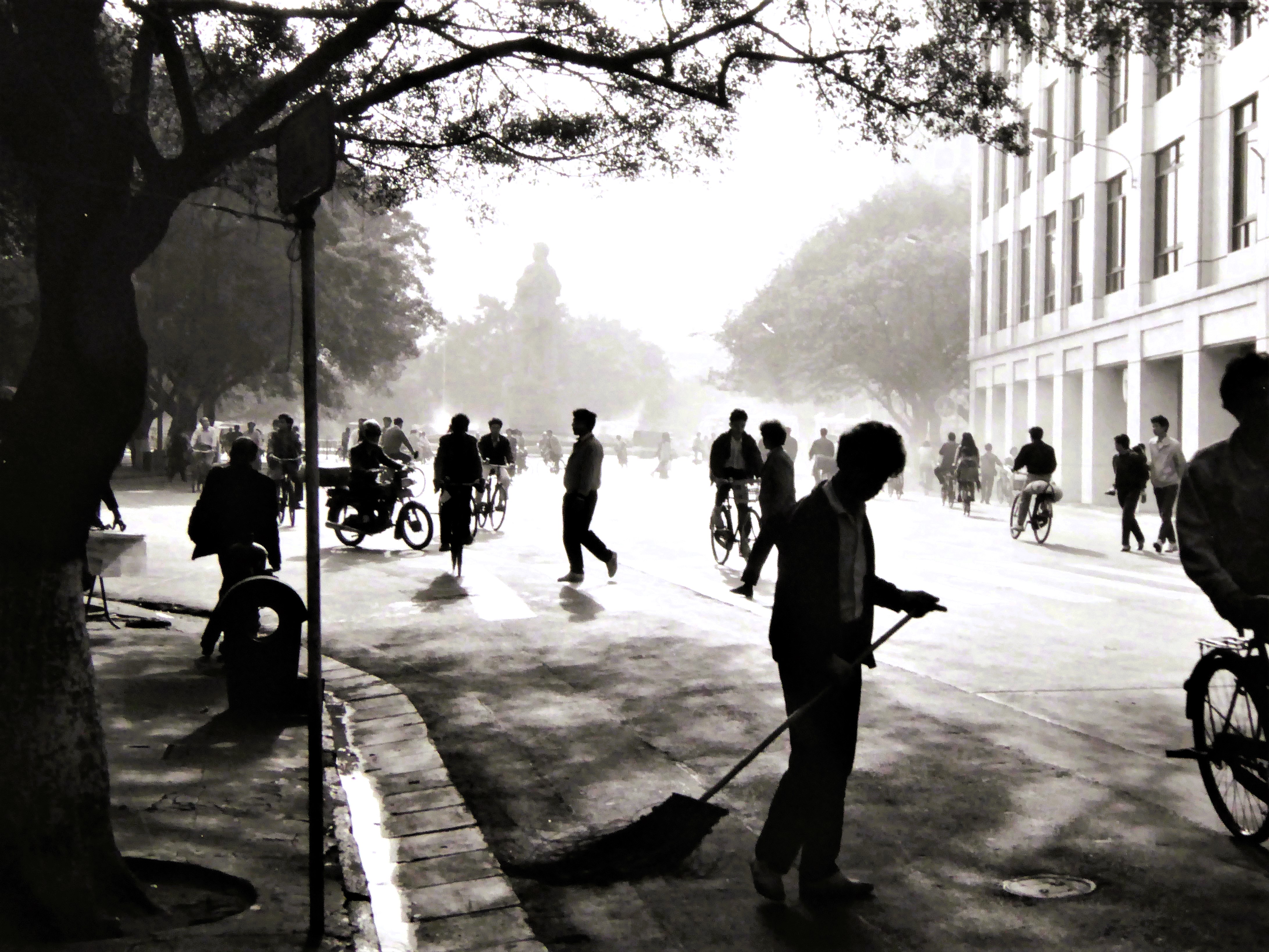
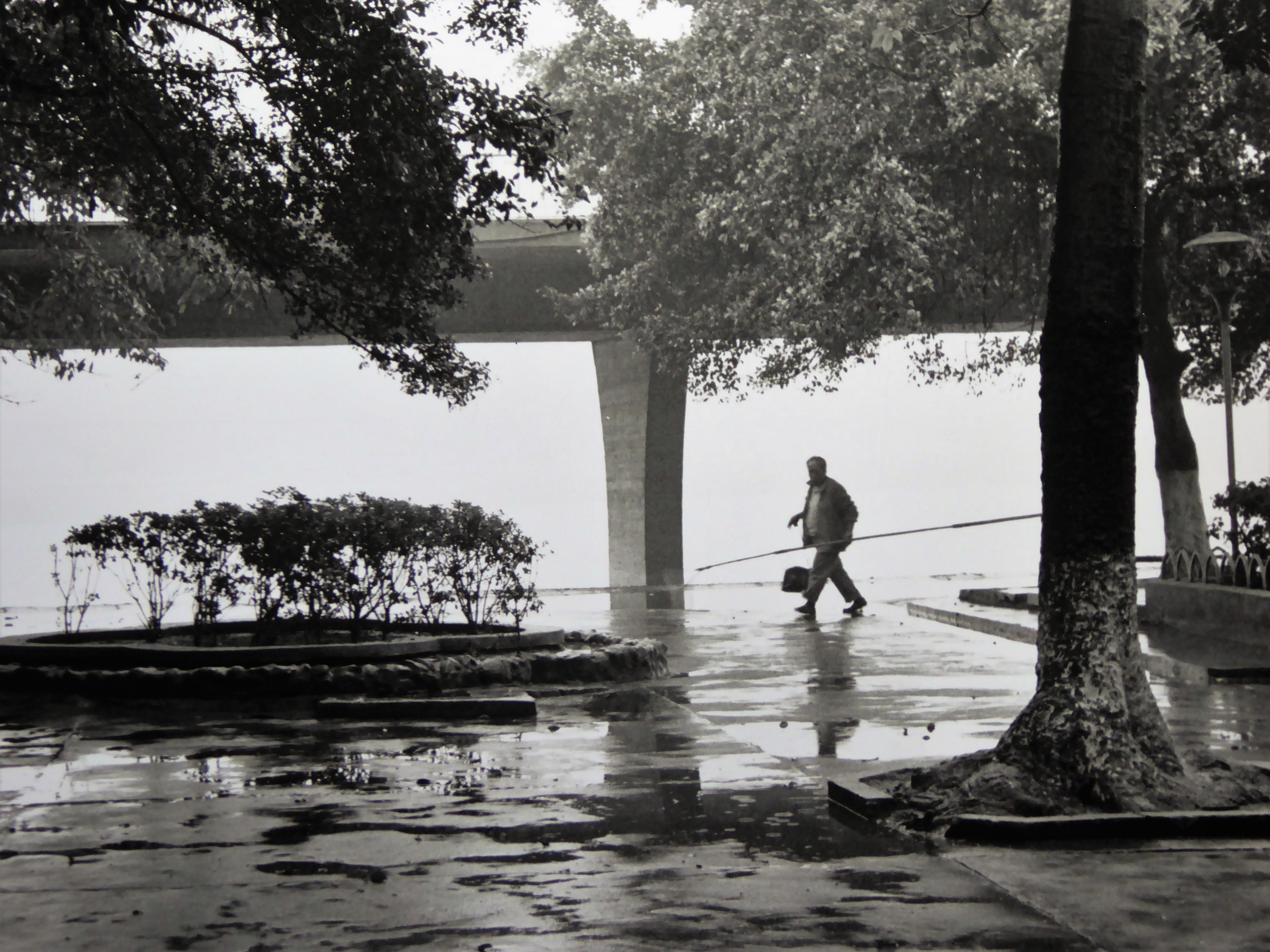
CHINA IN BLACK AND WHITE, ANNO 1994
These photos were taken with a manual camera using film – which I then developed and printed – a long winded process involving hours spent in a dark room. Digital cameras were still a long way off then (I preferred black and white because I liked the starkness and power of black and white).
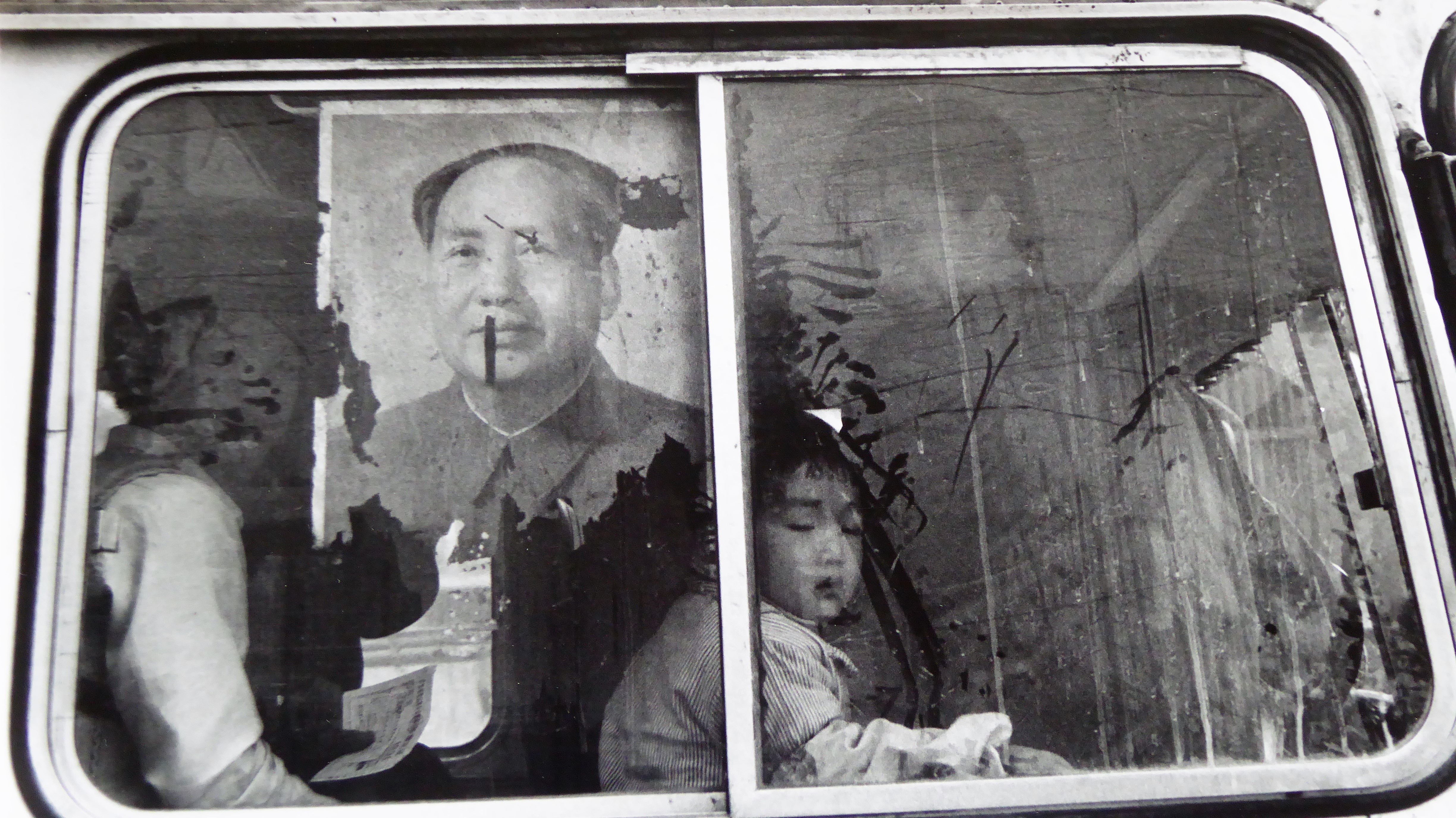
An image of Mao Zedong, the so-called ‘Great Helmsman’ of Chinese communism. He was a ferocious dictator who was responsible for the so-called ‘Great Leap Forward’ – the collectivisation of Chinese agriculture in 1958 – ’61, which like Stalin’s collectivisation of Russian agriculture in the 1930’s, resulted in mass starvation. An estimated 40-50 million people died as a result of the Great Leap Forward. Later in the 1960’s Mao then unleashed the so-called ‘Cultural Revolution’, whereby professianal and educated people were seen as ‘anti-revolutionary’ and dismissed from their jobs and sent to work with the farmers whilst at the same time, a wave of student revolutionaries went on the hunt for people considered to be ‘incorrect’ – incuding their own parents. Mao Zedong was a tyrant who inflicted enormous damage on his country. When he died, he left his country behind as a poor, undeveloped nation, though today no one is allowed to say as much. The legacy of that appalling tyrant has been rewritten and used to legitimise today’s Chinese tryant, Li Jing Ping. All Chinese banknotes in China’s new age of state capitalism bear the image of the ‘father’ of the Chinese communism.

CHINA IN COLOUR, 2024
These photos were taken with a digital camera (a panasonic Lumix).
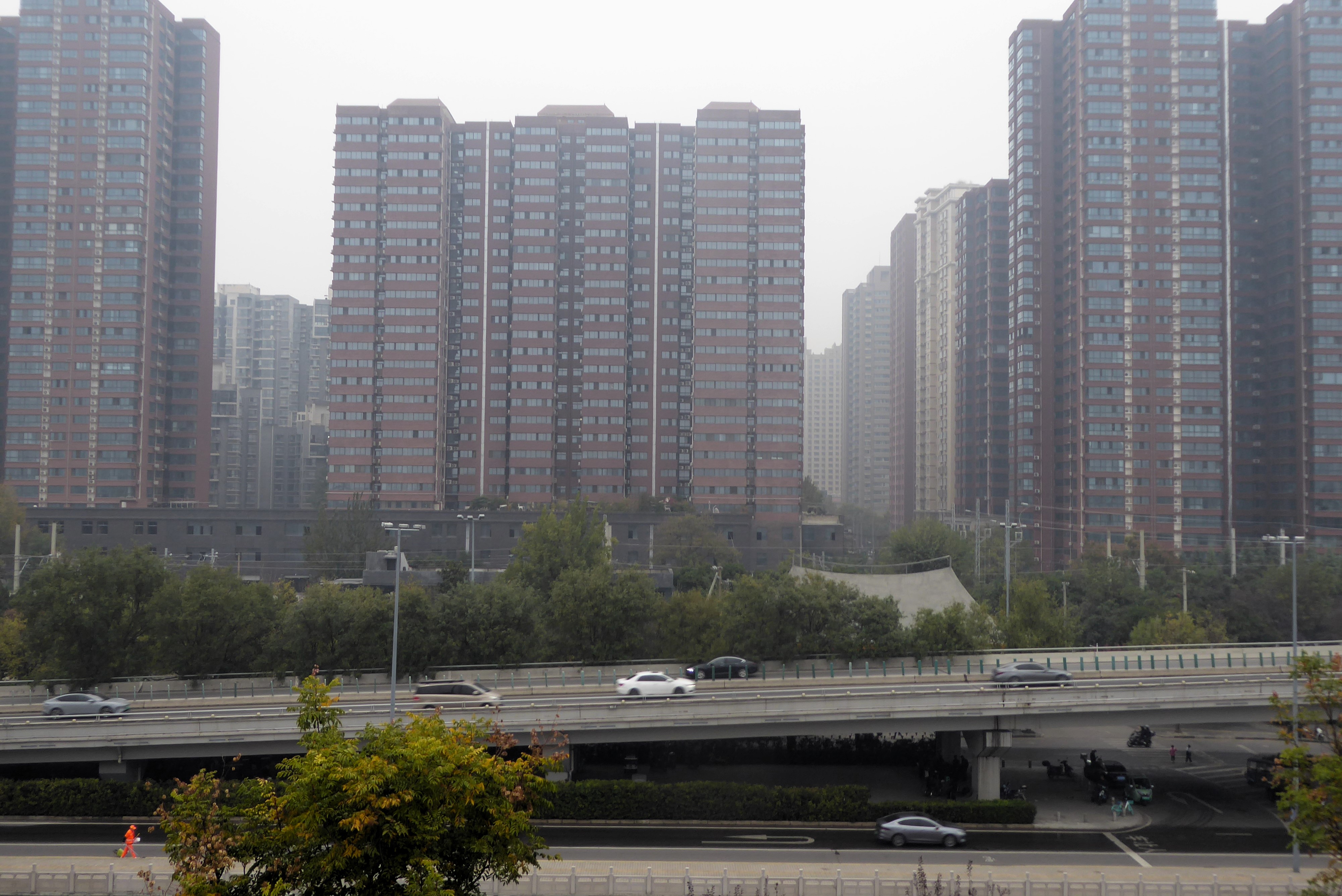
A landscape crammed with high rise apartment towers is the ubiquitious scene greeting the visitor to any Chinese city today. Almost 50% of the cars are electric but air pollution remains a problem (although very much less than a typical Indian city)
TIANAMEN SQUARE AND THE FORIDDEN CITY
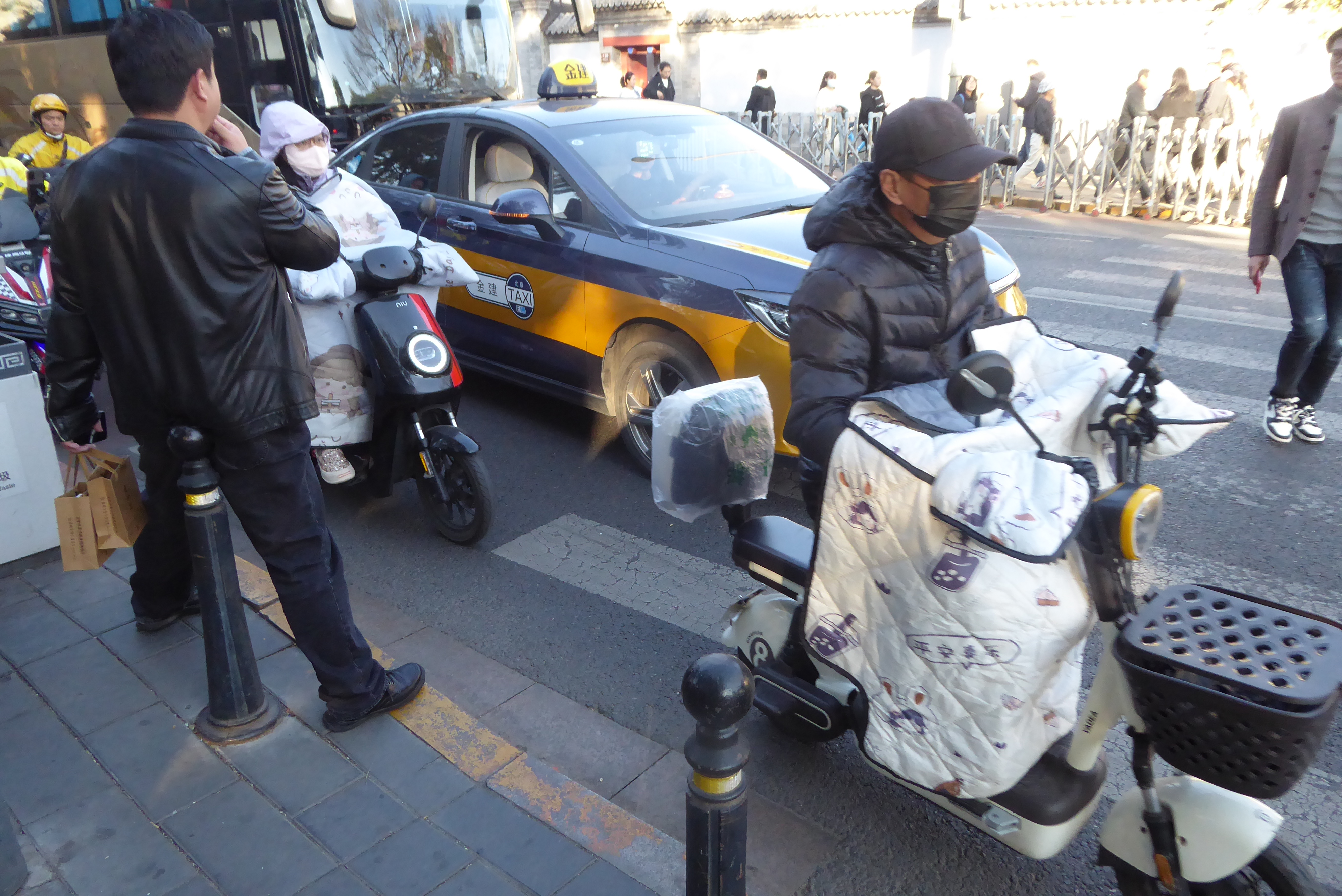
Our journey started in Beijing. It was November and cold. A common sight on the roads and backstreets was motor cyclists with heavy cloth at the front of their machines to ward off the cold air..
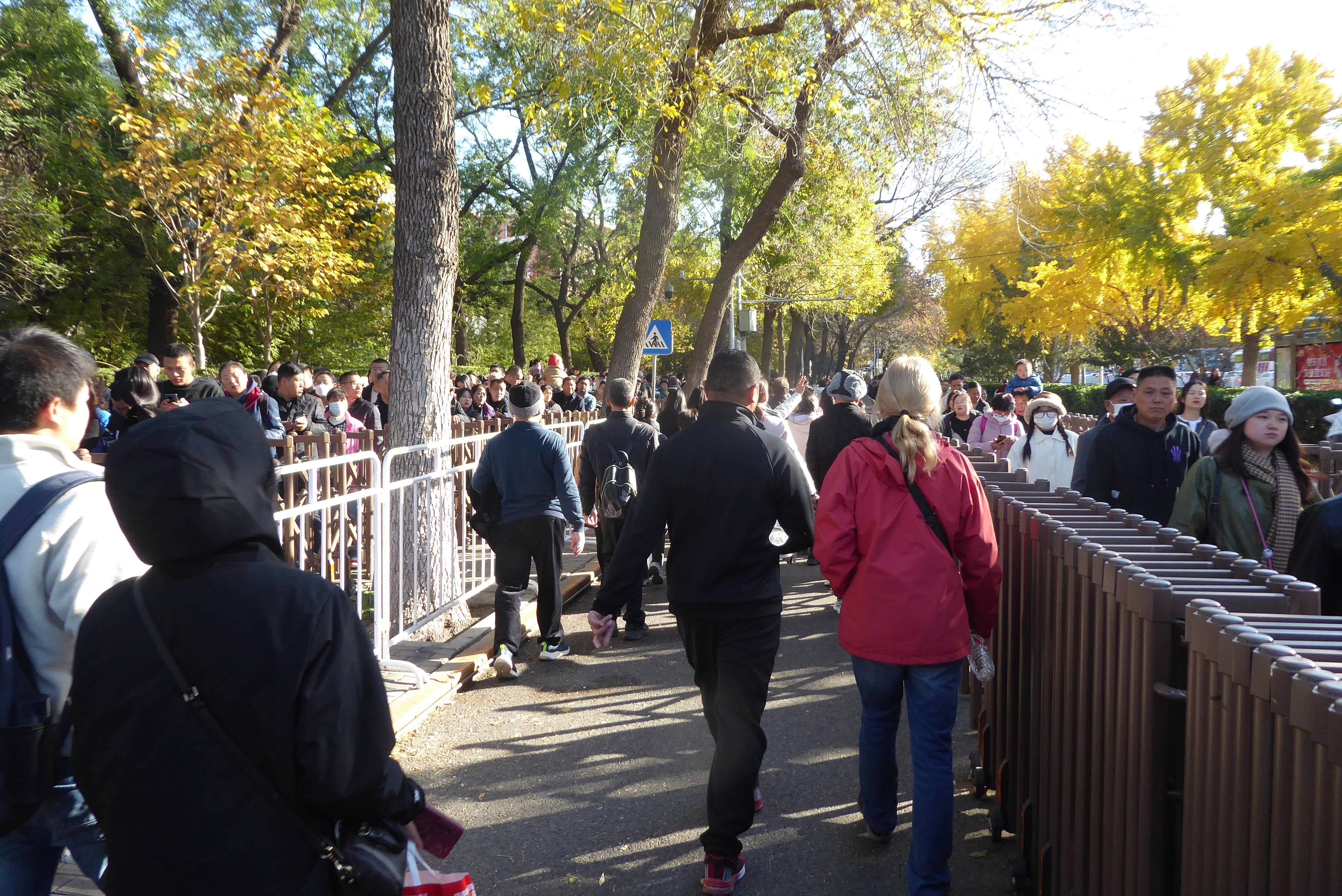
Our first tourist sight was Tianamen Square and the Forbidden City. There were very few western tourists in Beijing at the time but nevertheless we were greeted by the sight of a large mass of Chinese tourists and took our place in a snaking line an hour before the entry lockets opened. It was our introduction to a clear break with the past: Chinese people – and many of them from outlying towns and rural areas – visiting tourist sights in their own land. As we soon discovered, behind this mass Chinese tourism was a kind of semi-religious worship of China’s past and its achievments.
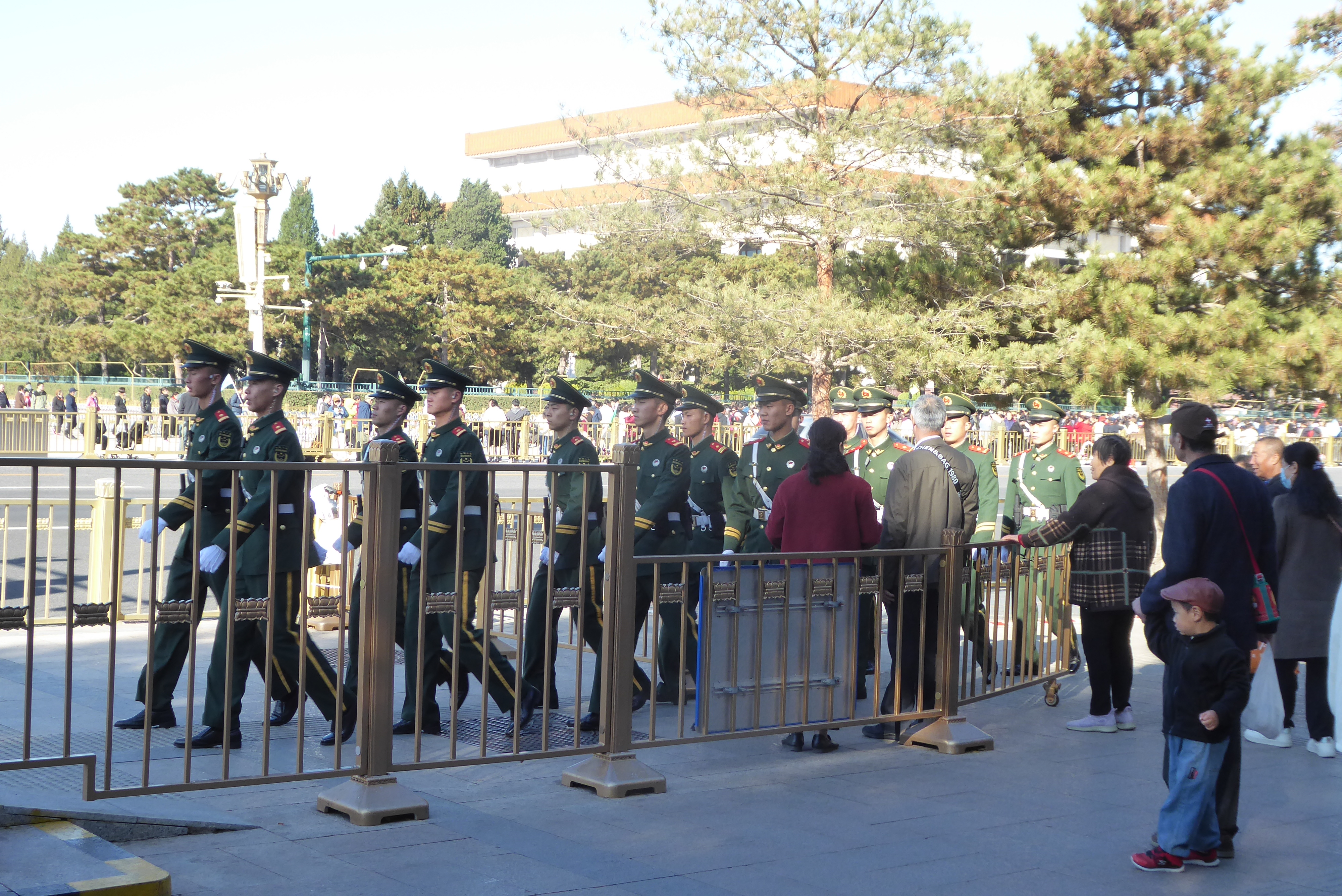
We had to go through two checkpoints where we body searched and later, a third one and in the meantime had to show our passports maybe 7 or 8 times. There was an obsession with ‘security’ or better said control. In the following days we noticed the police stopping motorists to check their ID cars. Emerging from a Gestapo like search and control session, we were greeted by the sight of goose stepping military guards. For Chinese people this is normal, a part of a safe and orderly society. If there is one word which incites apprehension amongst them it is ‘chaos’.
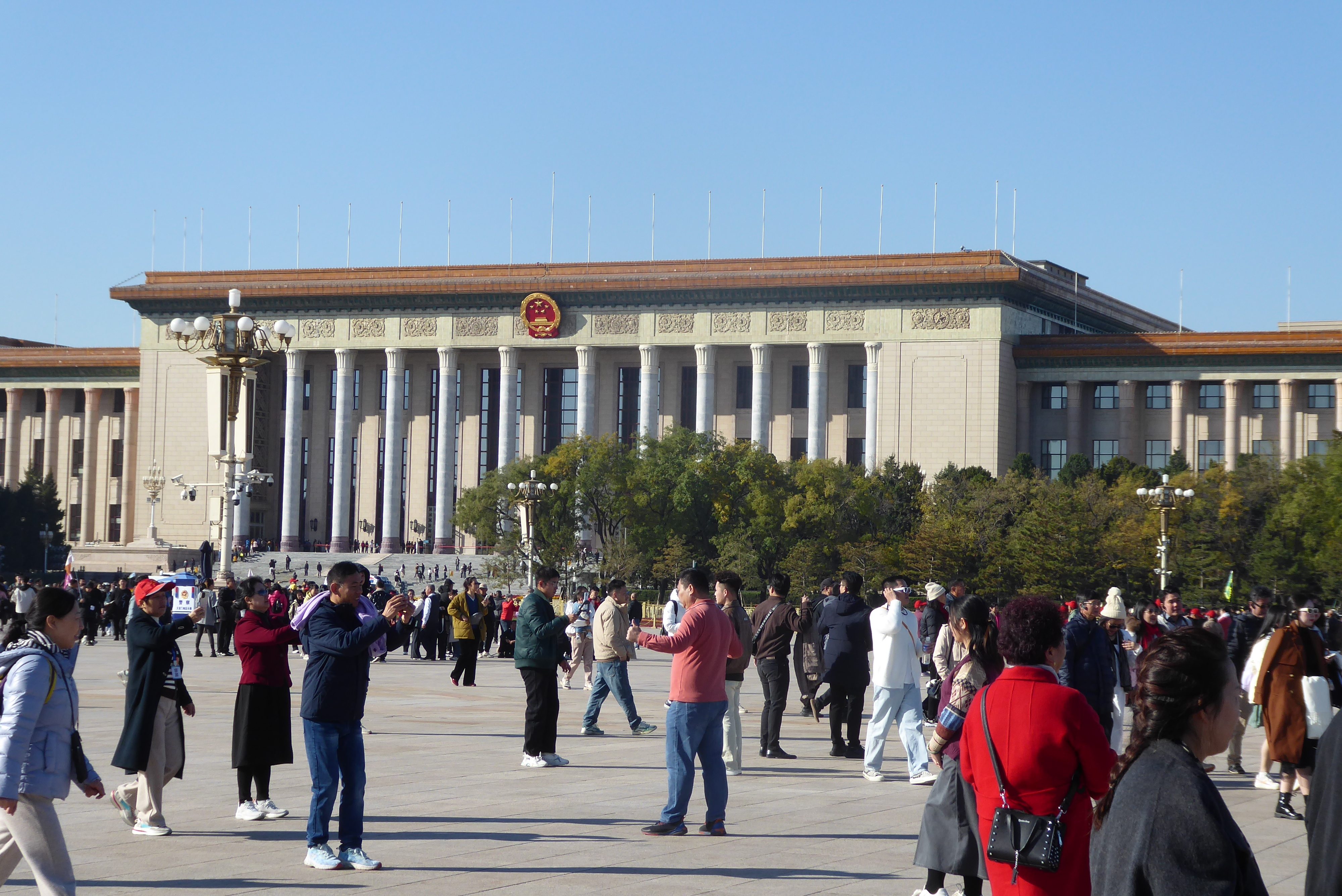
Tianemen Square. We had the inestimable luck of having fine weather, a rare thing in China when for much of the time it is grey and misty
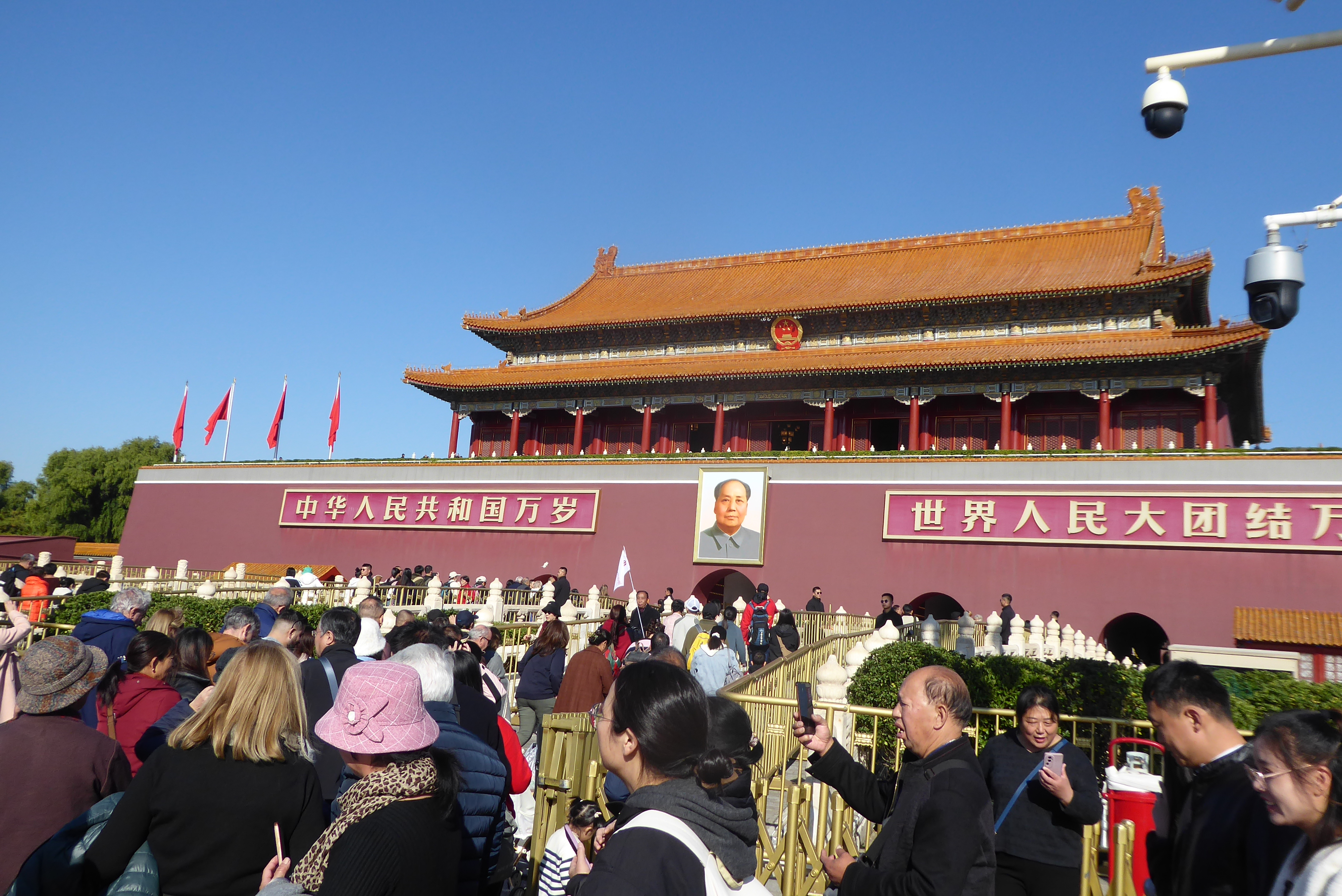
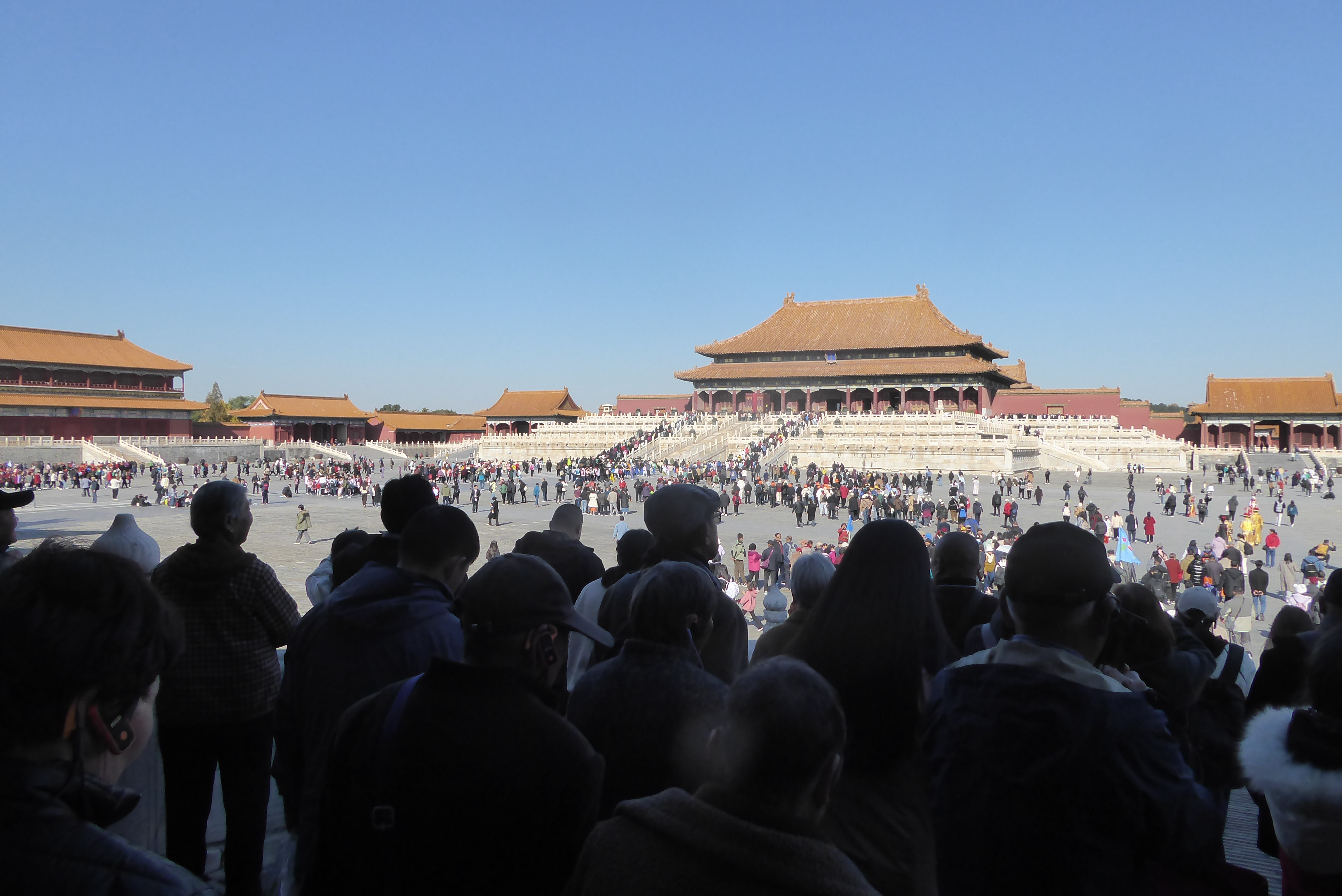
Waiting to enter the Forbidden City, where for centuries Chinese Emperors resided with their legions of concubines and ruled over a mighty nation; no one was allowed to enter the Forbidden City and to do meant instant death.
And today, everyone is allowed to enter…..
THE LAMA TEMPLE…
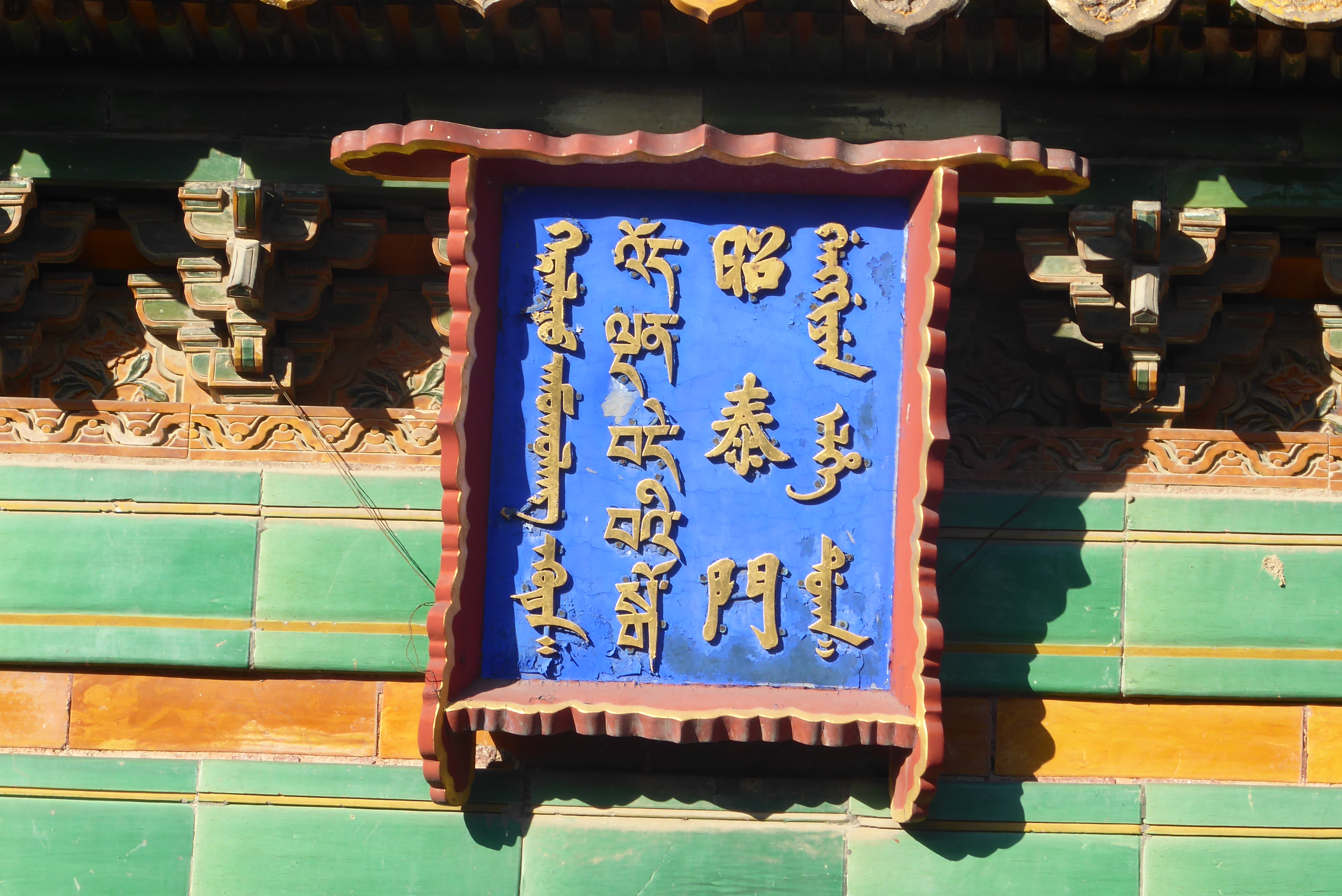
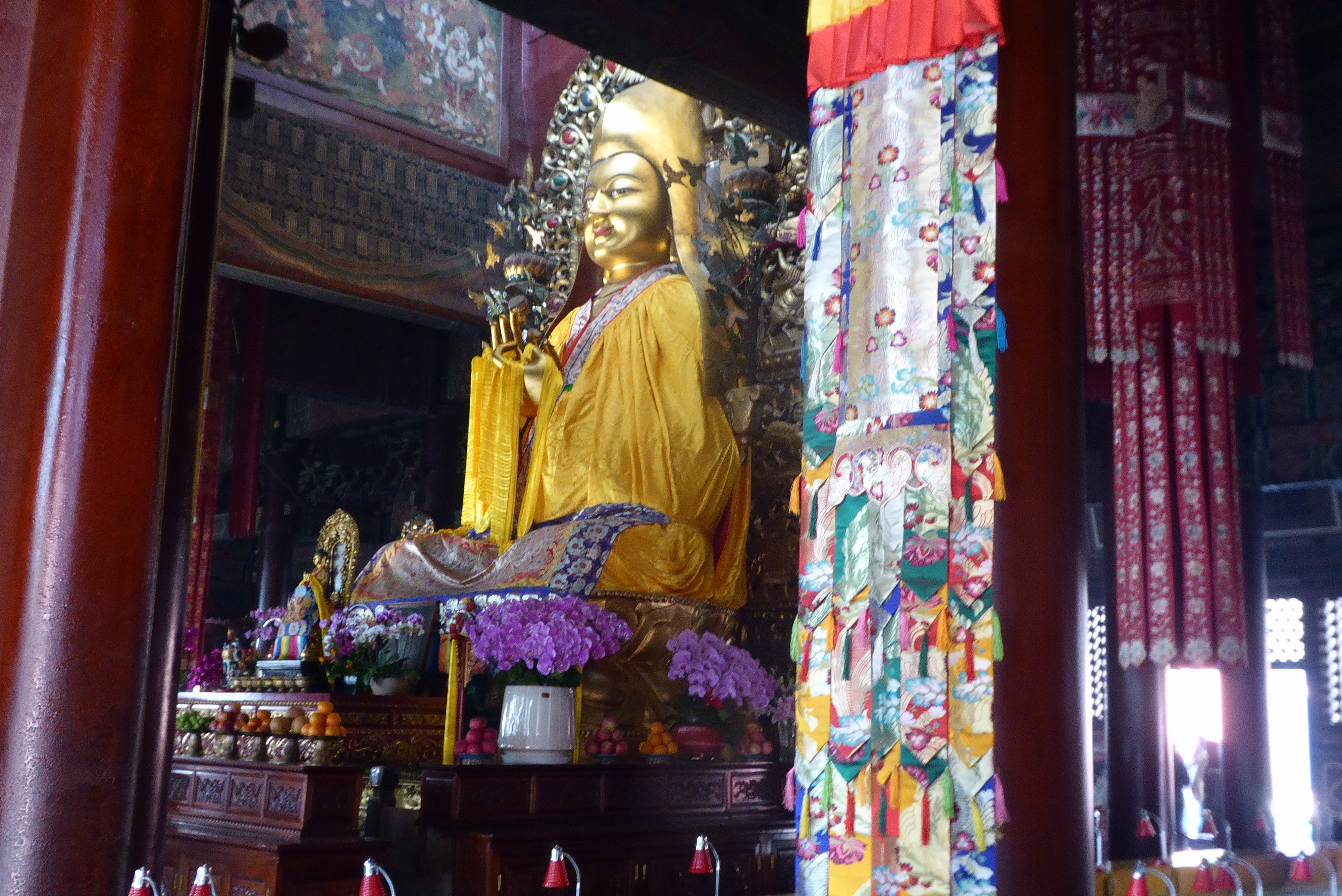
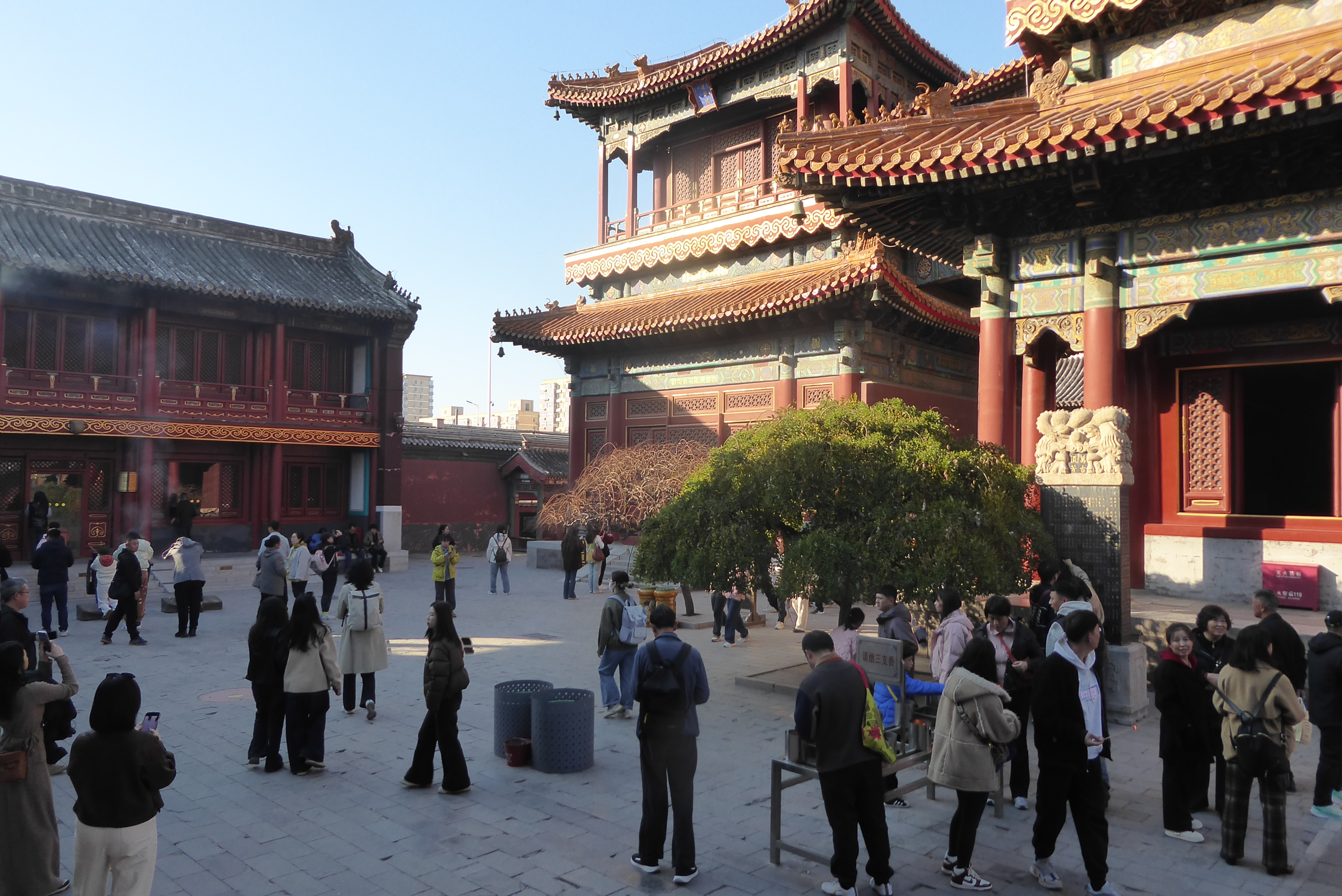
In the afternoon we visited the so-called Lama Temple. Whereas most of the Chinese visitors to the Forbidden City were older people from outside Beijing, the Chinese visiting the Lama Temple – a Tibetan Buddhist Temple – were overwhelming young. Even though no one was allowed to even mention the Dalai Lama, it was interesting to see so many young urban Chinese at this temple.
THE WALL
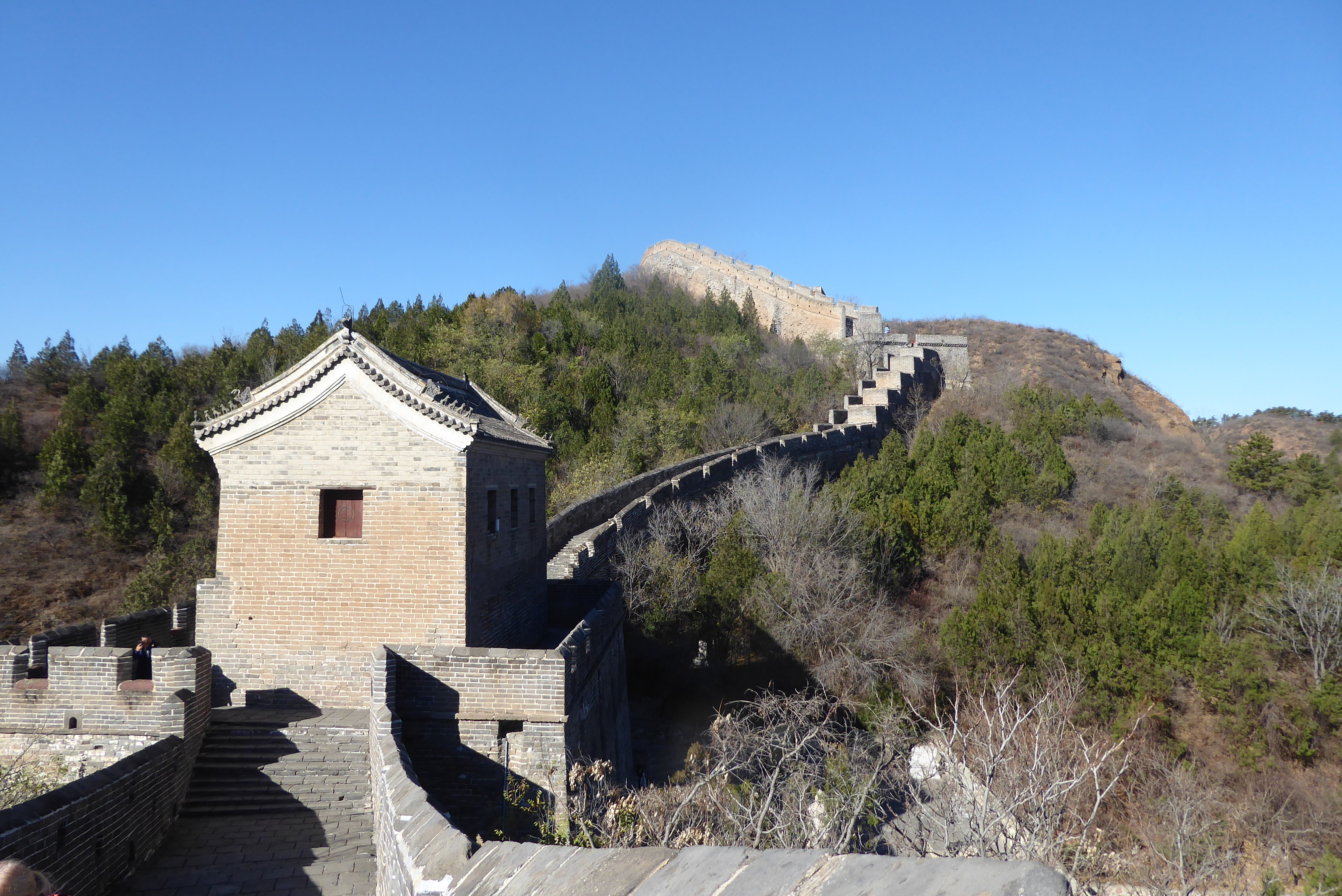
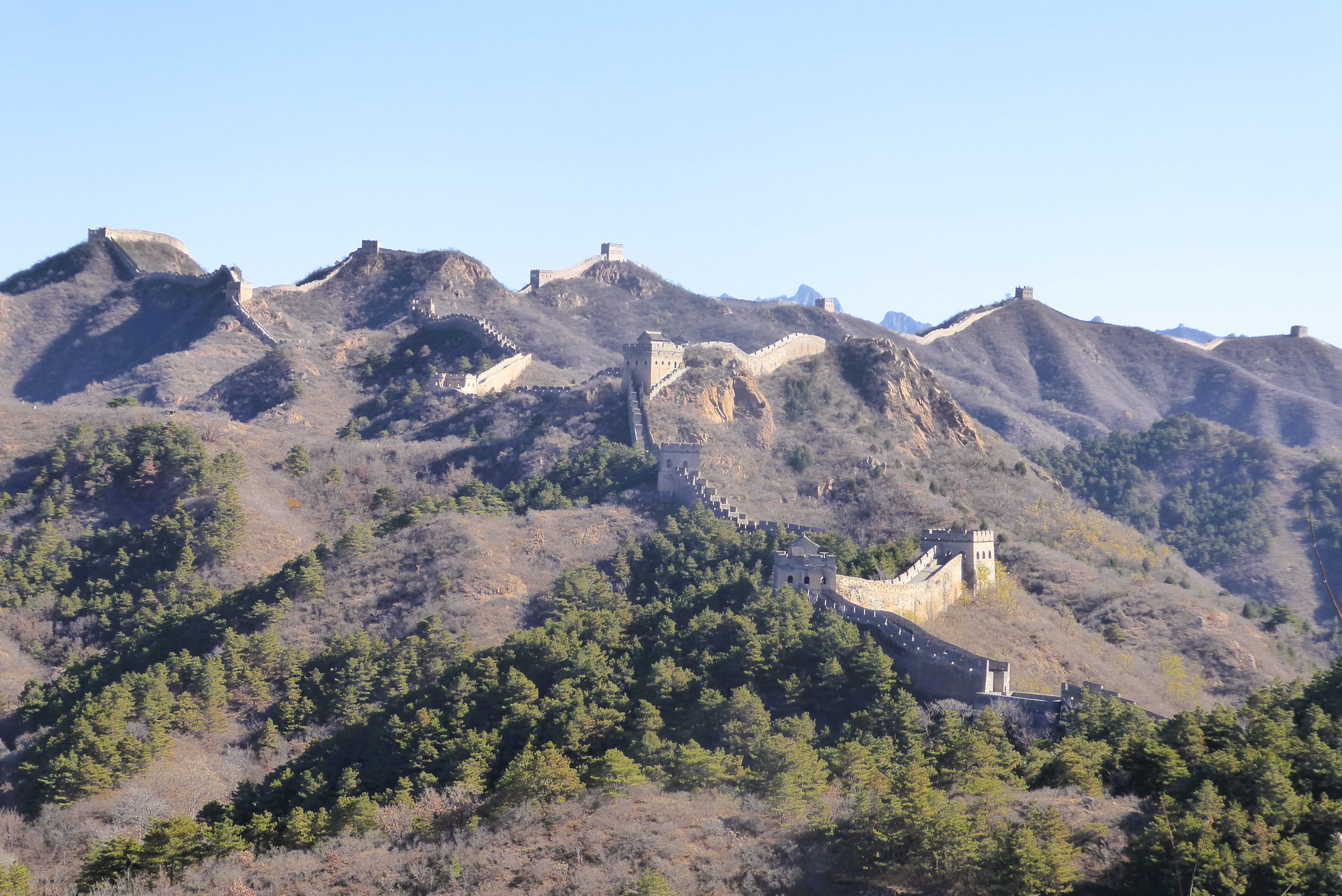
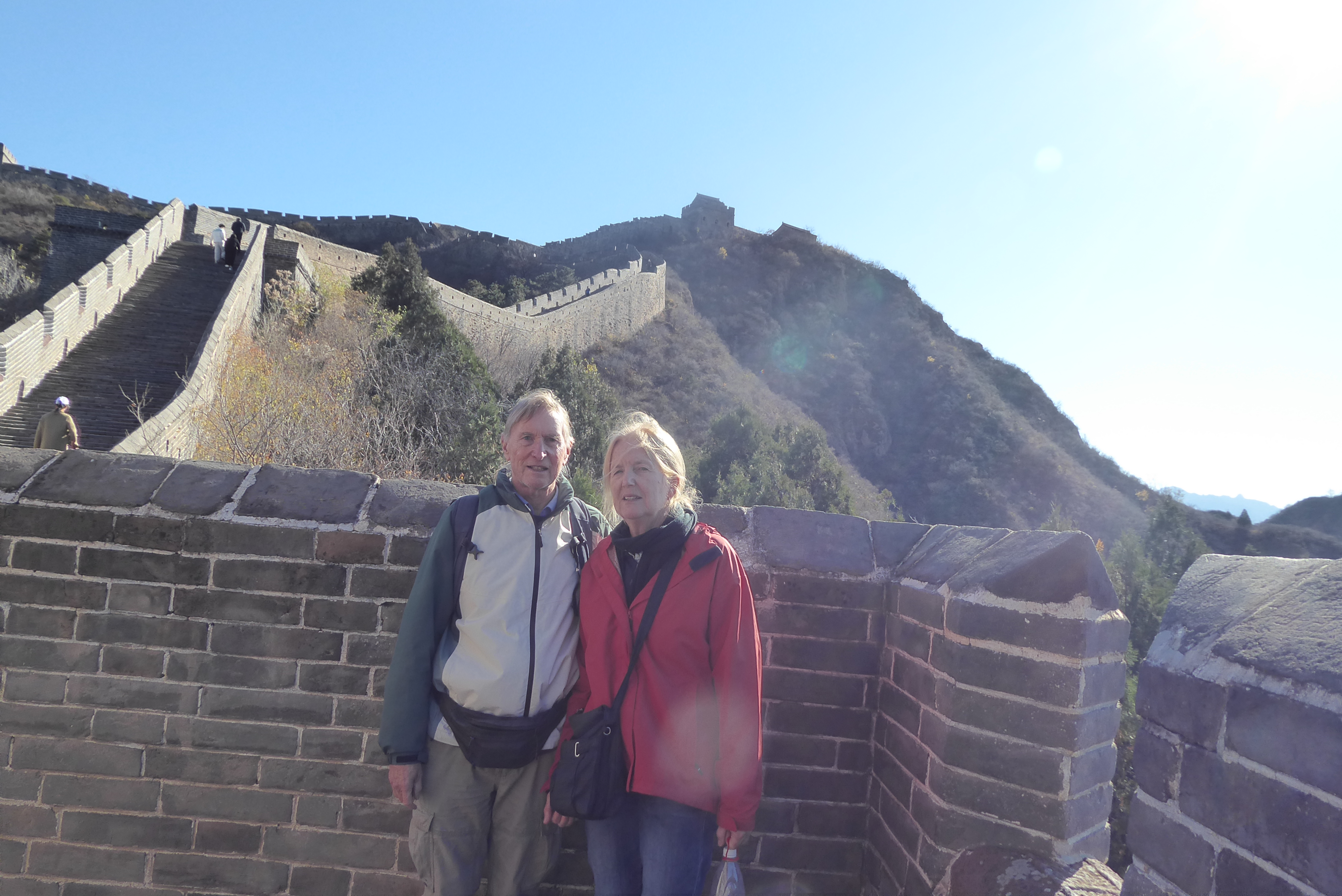
The following day we visited The Great Wall – and at a place where the number of tourists was far less than the sections of The Wall closer to Beijing. It was a long drive out there – 3 hours there, 2 hours on the wall, 3 hours back. It was a long day but it was at least in hindsight worth it; there were indeed only a few tourists, all of them Chinese. And the weather was fine again…
 Serious Travel Images