
In march 2019, Anya and I flew to Minsk, the capital of Belarus.
Ruled by communist dictator named Lukashenko, the country had been hermetically sealed off from the outside world for decades and had only recently opened up to tourists from Western Europe (desperate as it was for hard foreign currency).
We had an ingrained dislike of having all our accommodation booked in advance because it allowed no flexibility – often its unavoidable of course but as far as Belarus went, we assumed we had a fair bit of latitude since very few tourists ever went to Belarus (besides a few Russians).
It was kind of ironic: had we made the attempt to book ahead before going to Belarus we would have realised that travel to that hermit country was very different to anything we had done before: few tourists ever went there so consequently there were also very few places to stay. You travelled to those places where there was somewhere to stay and not where you wanted to stay.
It was something completely beyond our frame of reference. We became acquainted with this situation during the first few days in Minsk when we tried to book the places we had marked on our map of Belarus which we thought looked interesting – and discovered that there was nowhere to stay there.
We were forced to completley change our plans. Choice, options, were luxuries we didn’t have….and that was just the beginning….
It didn’t take us long to discover that the official government hotels – intended for party officials and bureaucrats – were to be avoided if possible because checking-in involved a simply stupendous amount of paper work.
Private accommodation was preferable because there was less form filling to surmount. Another plus point was that it was that in this kind of accomodation that one got an intimate view of how ordinary people lived in this Stalinist era society – which had been quarantined from the outside world for over 50 years (and unbeknown to us then, about to be closed off again indefinitely thanks to the Covid pandemic followed by Vladimir Putin’s murderous invasion of The Ukraine).
The only catch with booking private accommodation, especially in towns rather than the cities, was how to get there. Regional transport involved travelling in run-down mini-buses and there were often no direct connections. Furthermore it was often hard to get reliable information because of the language barrier; in the cities we usually found someone who spoke some English but it was a different matter outside the cities; furthermore, the printed information on the boards at the bus stations (as indeed on all of the signs) was in the Belarussian script, which like Russian, is Cyrillic.
These obstacles however did not deter us and some of the places we ended up staying at were unique travel experiences – no better example in this respect was the town of Horki……
We were staying in a city called Vitebsk, in eastern Belarus and were busy trying to work out where to go next when Horki came up on the apartment come up on Booking.com in a town called Horki.
Horki? Hmm!
We got out our map of Belarus and looked it up. It was small – a town rather than a city – and it was situated south east of Vitebsk.
Accommodation being hard to find, she booked the apartment – and then we spent a lot of time working out how to get there by public transport and this was no simple matter.
It involved two long bus journeys with a two hour stop in between.

At a local take away place whilst waiting for the connecting bus to Horki – the Coke adds still visible and soon to disappear with the Russian invasion of The Ukraine and the resulting sanctions (which included Belarus, a client state of Russia).
Arriving at a modern bus station (much of the infrastructure in Belarus is excellent), we stood around like lost sheep. Few people speak English in Belarus (and after all, have no reason to).
Anya sent a text and about ten minutes later, a middle aged woman appeared in the waiting room and addressed us in Russian. When we smiled and said ‘no Russian, sorry!’ she raised her voice, thinking that if she spoke loudly and slowly, we would understand her.
It was an amusing situation, one we have experienced before (people unused to foreign tourists find it hard to believe that there are people who don’t speak the same language as they do). With the translation service on our mobile we were able to establish a basic communication.
The woman motioned for us to follow her. We were expecting to have to take our rucksacks off and get into a car. But no, the idea was that we were to follow her.
She walked at a brisk pace.
All we knew was that we had booked an apartment but we had no idea where it was. We followed her along a busy road; then she suddenly swung to right and we found ourselves walking over narrow paths and entering a maze of apartment blocks, most of them old and run down. It was as if we had crossed an invisible border and were entering a strange new land.
She stopped at one block, opened the main door, a heavy iron affair, and we followed her up a narrow flight of dusty, worn, concrete stairs. Finally we reached our apartment. There was a small entry hall, where we took off our rucksacks and boots and hung our jackets on a row of hooks. On one side of the entry hall was a small bathroom and toilet. In front of us was a lounge with fold up beds on one side and on the other, a small kitchen and dining area. This was a tiny apartment (our apartment in Rotterdam – 48 square meters – and was large in comparison).
But we loved it.
This was the real deal.
This was where ordinary working people and their families lived in Belarus.
This was travel.
We stayed there for four days, walking around Horki and out into the nearby countryside.
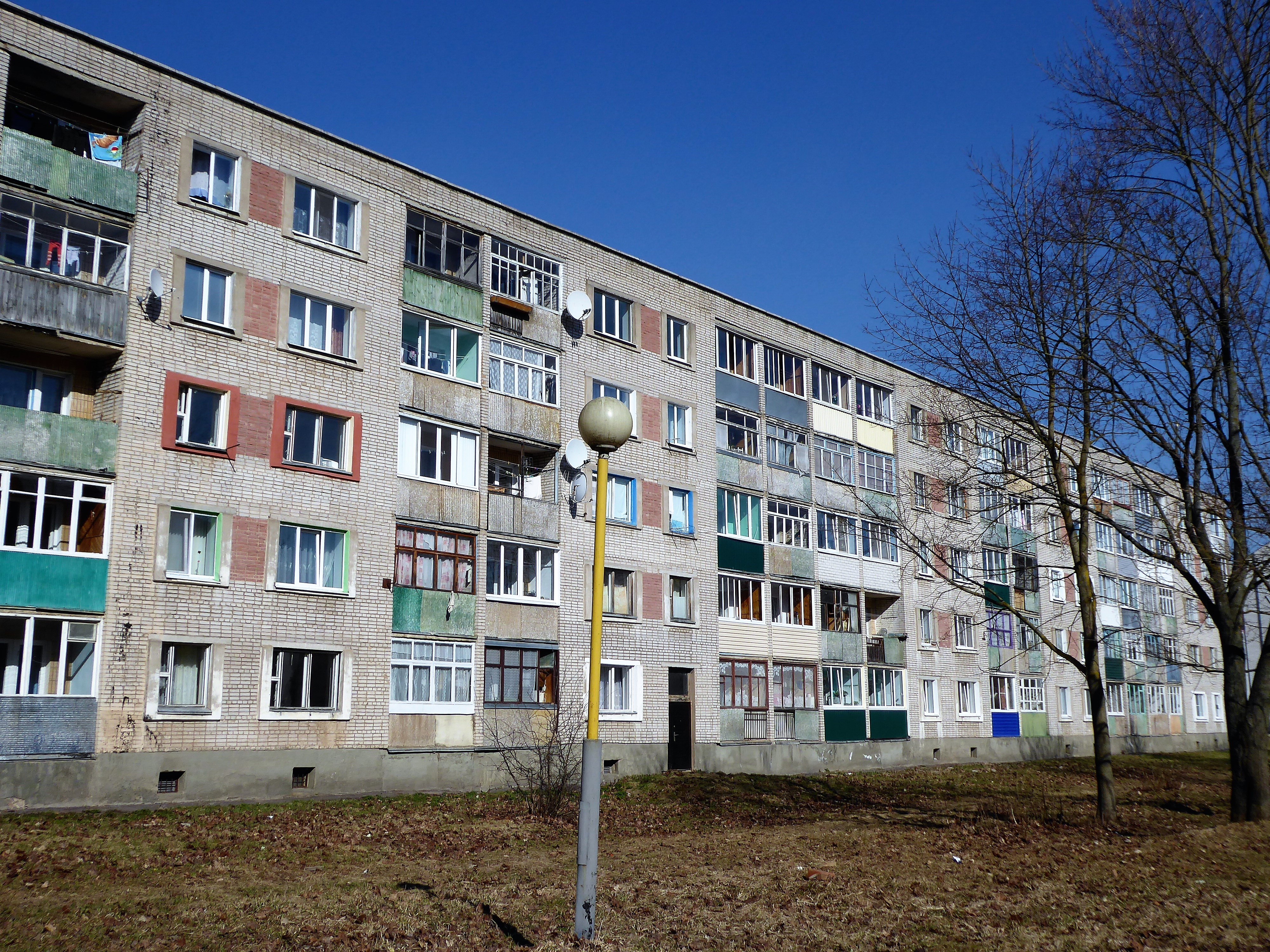
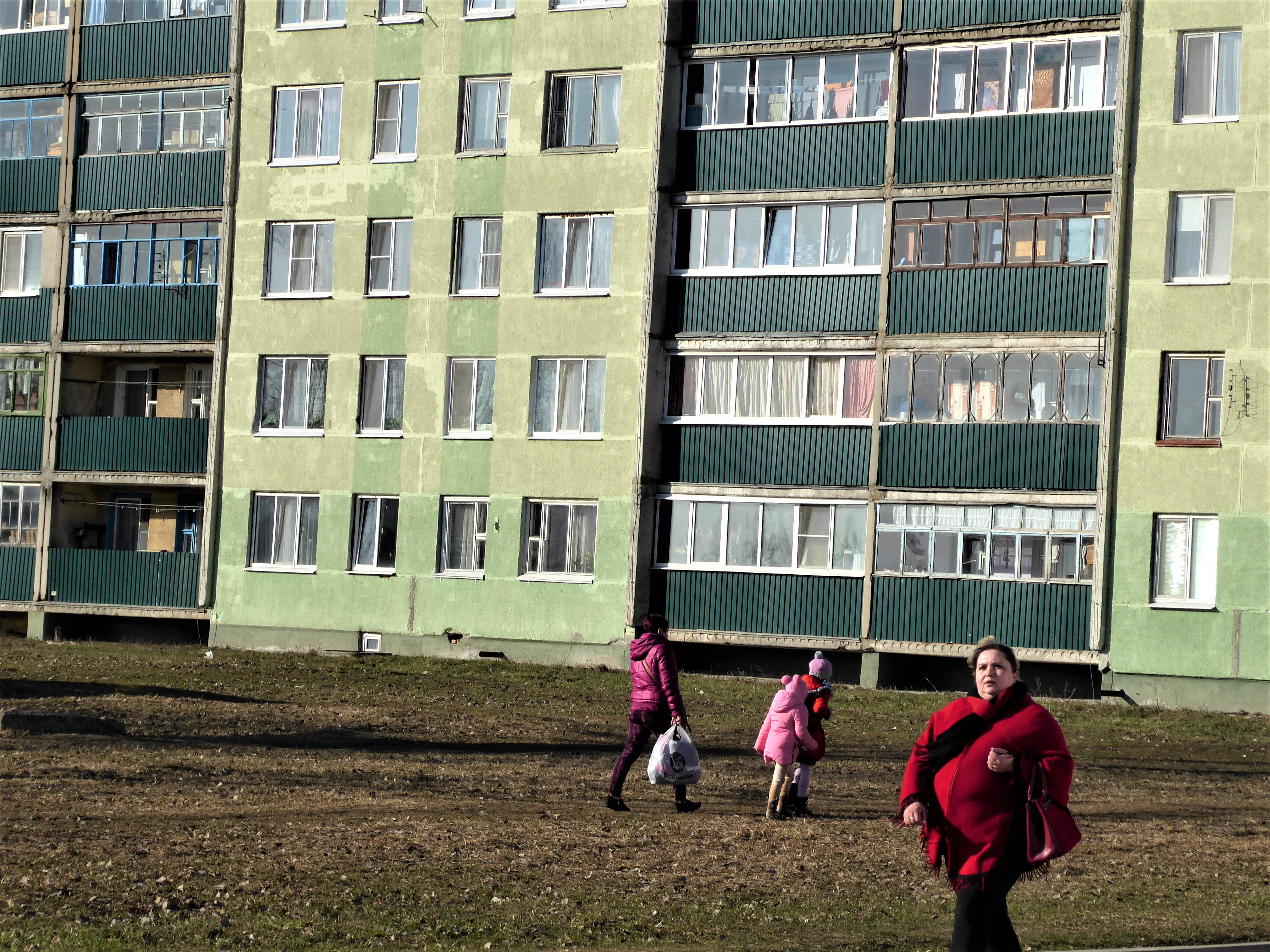
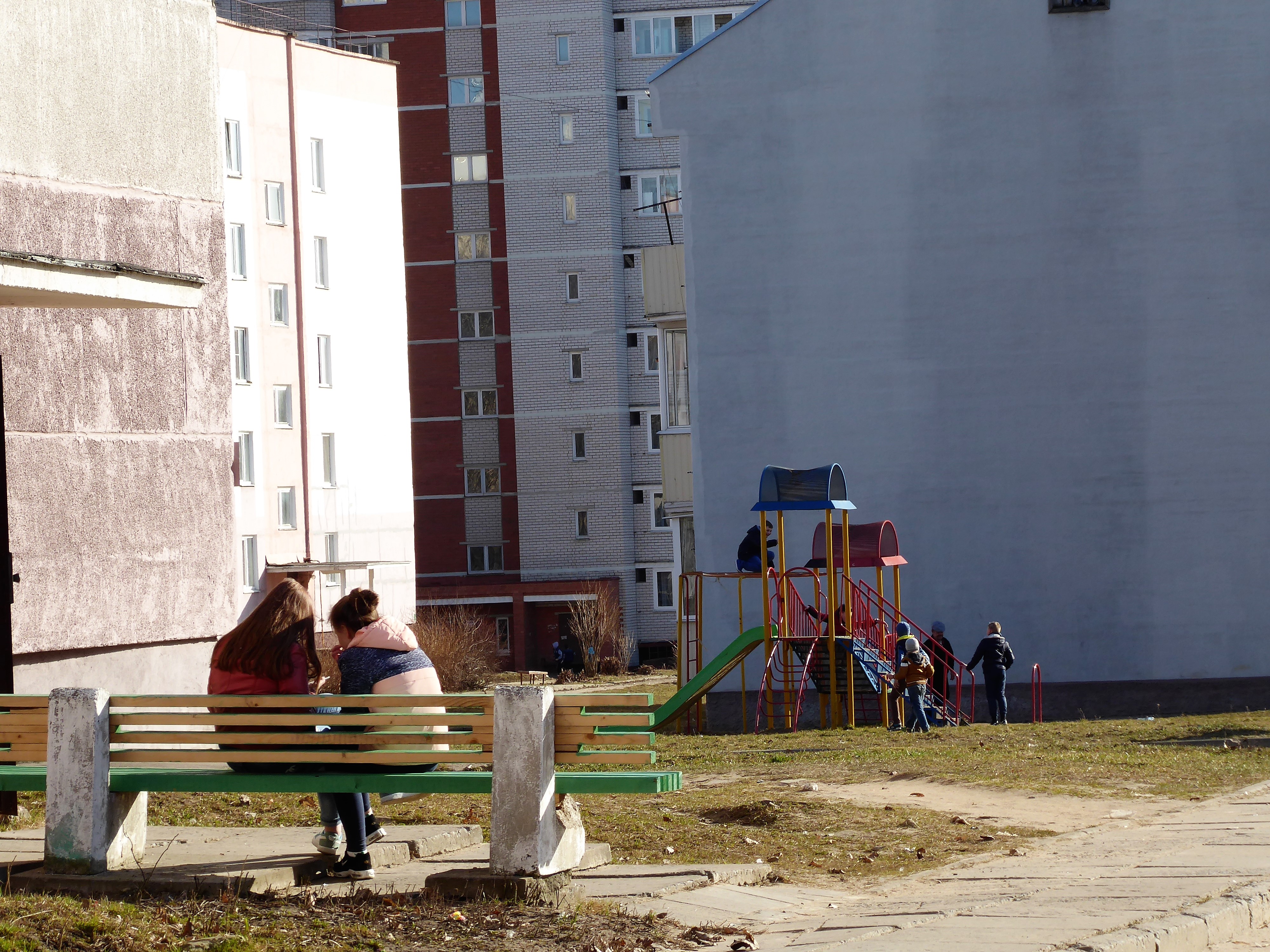
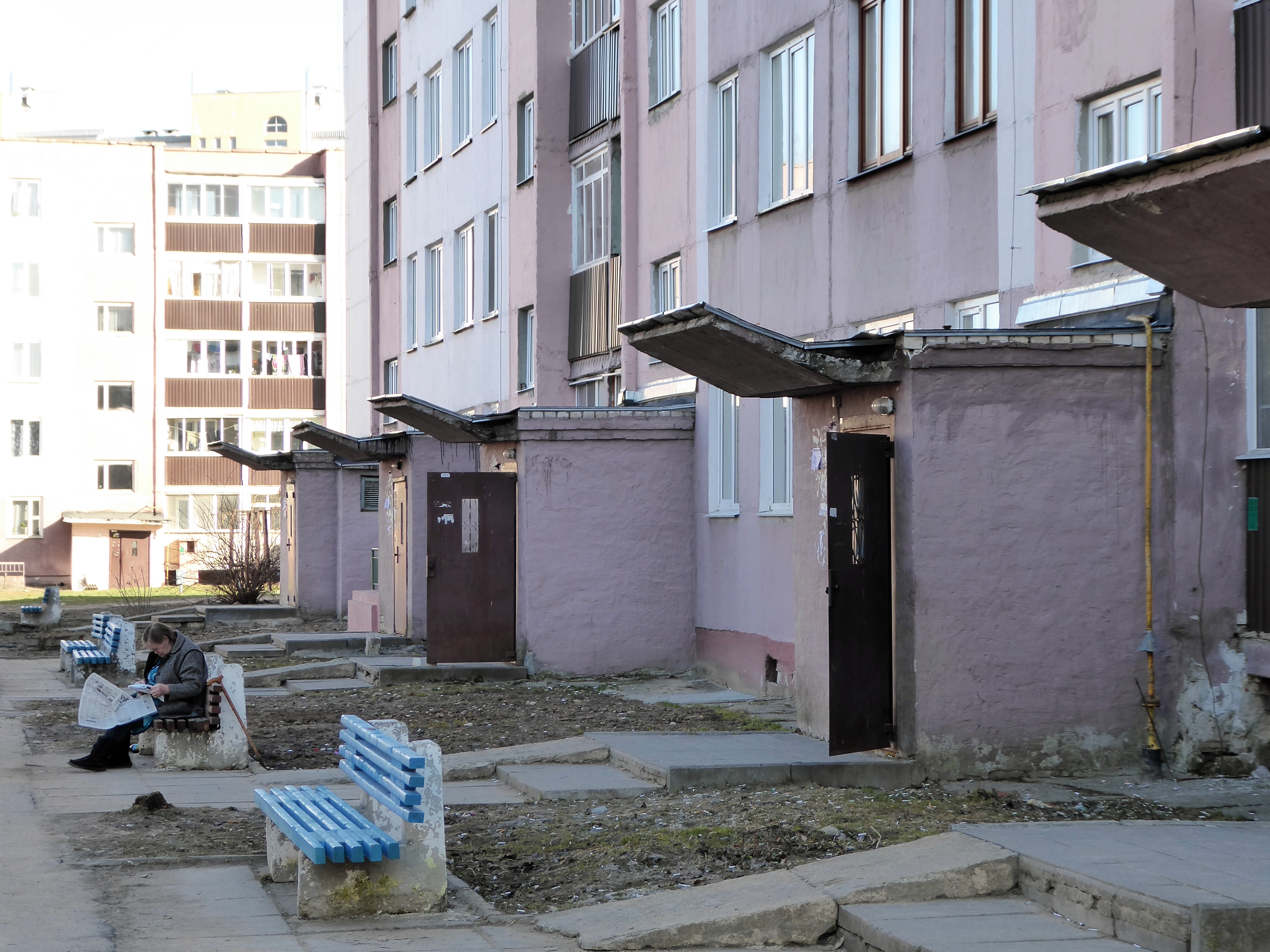
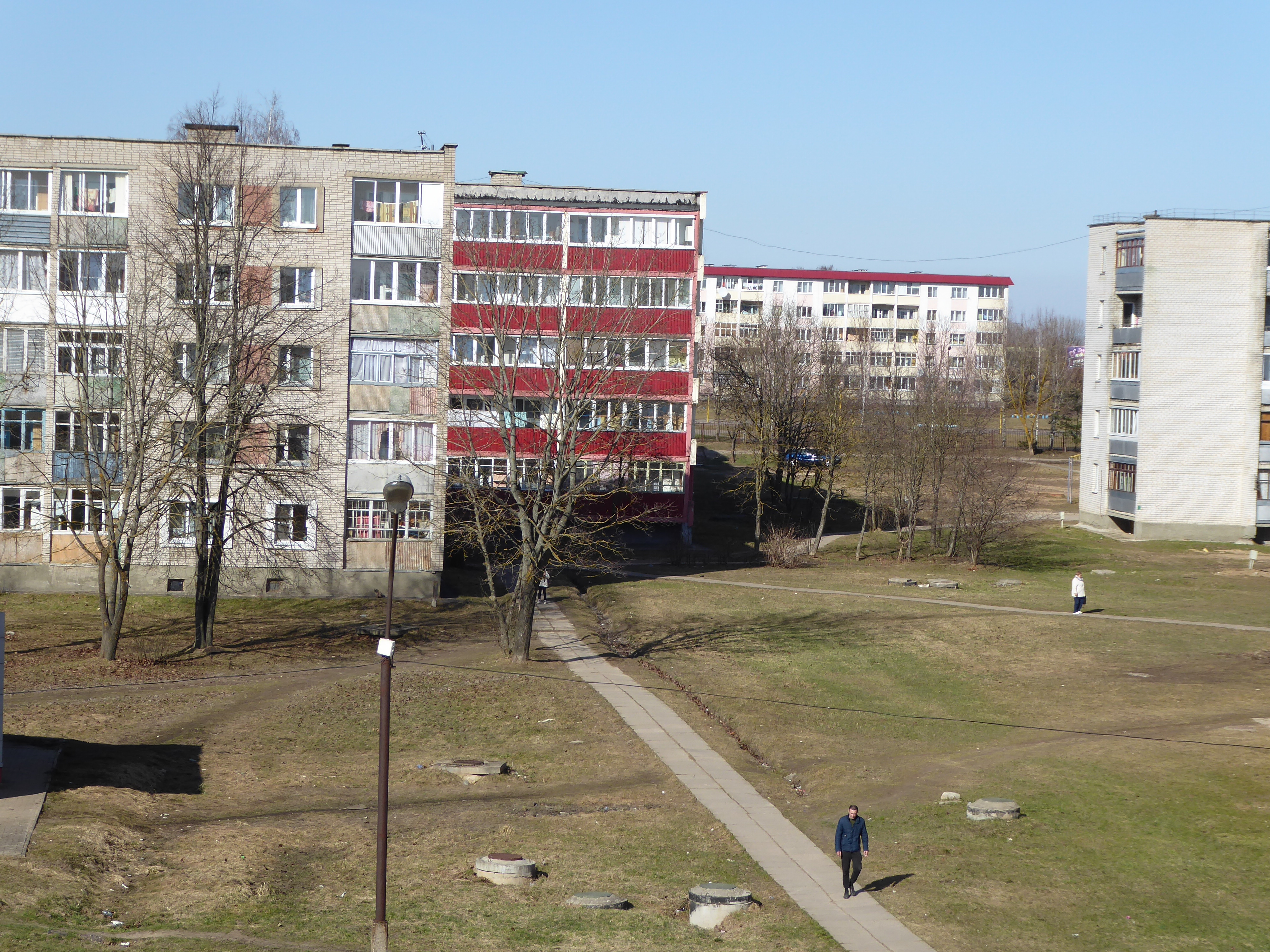
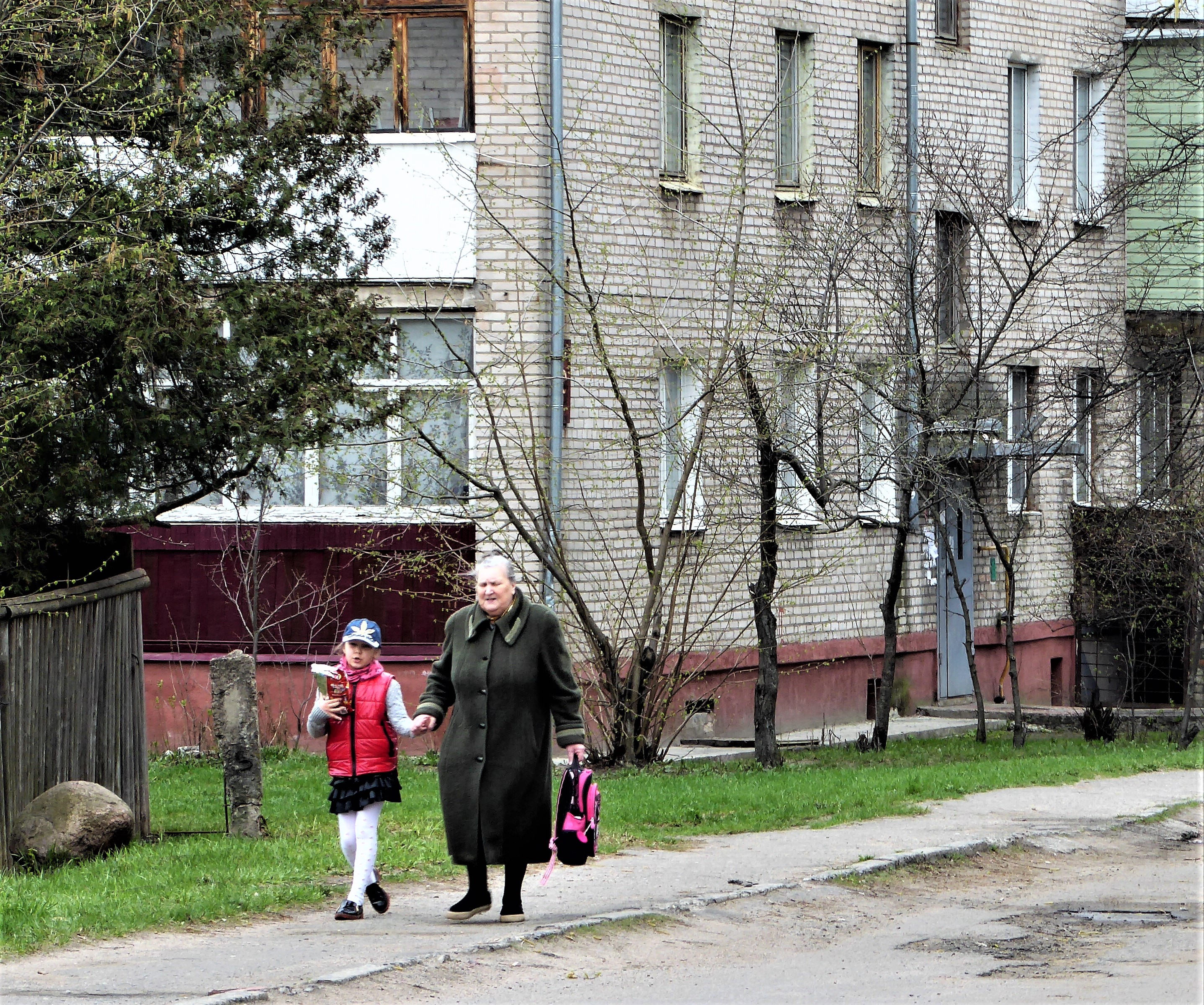
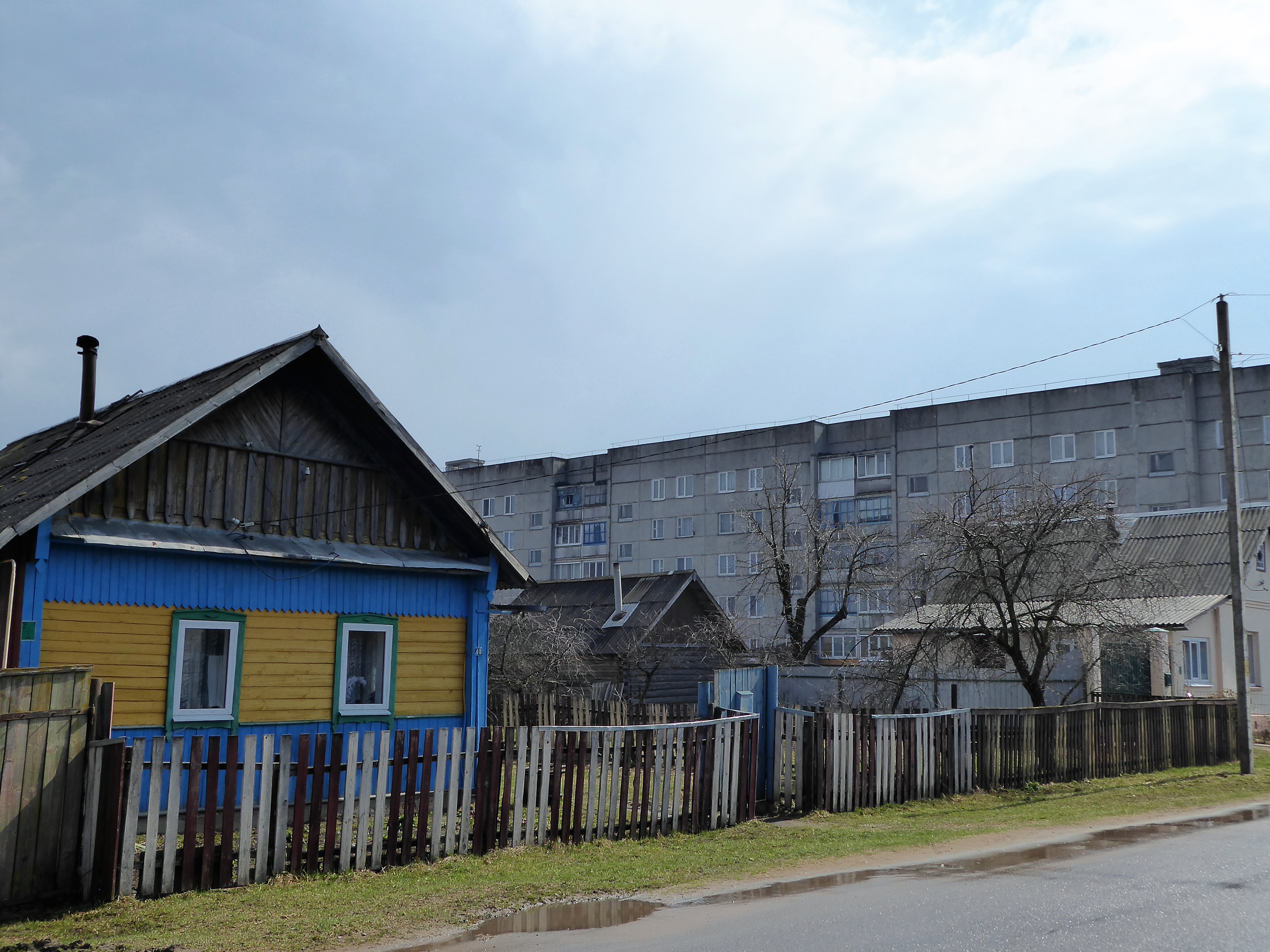
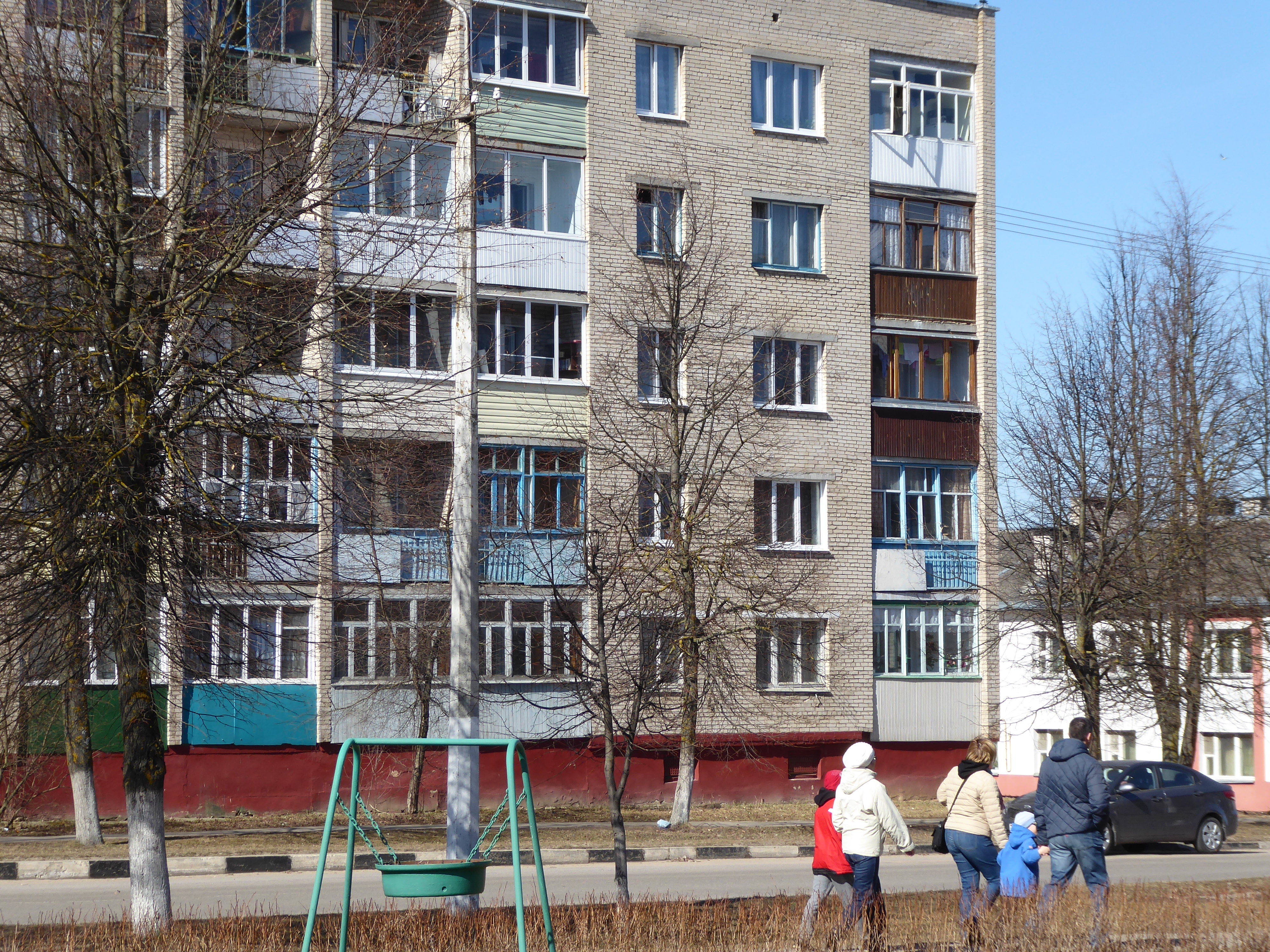
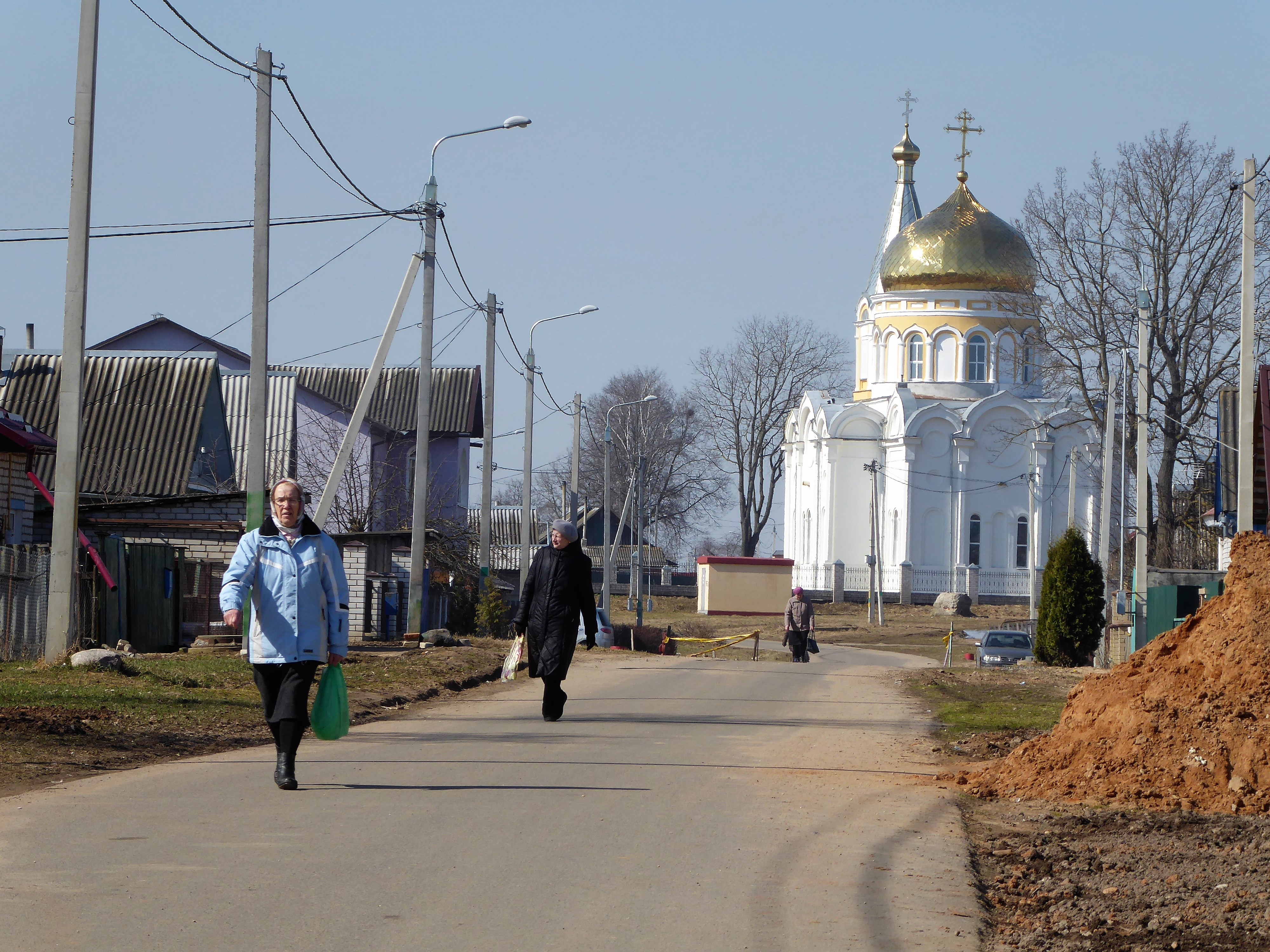
The following images were taken in the apartment block area in Horki (the first photo is of the block where we stayed).
These blocks were state-owned; an apartment, along with work and access to the state run health system were allocated by the state bureaucracy in a way of life totally controlled in every respect.
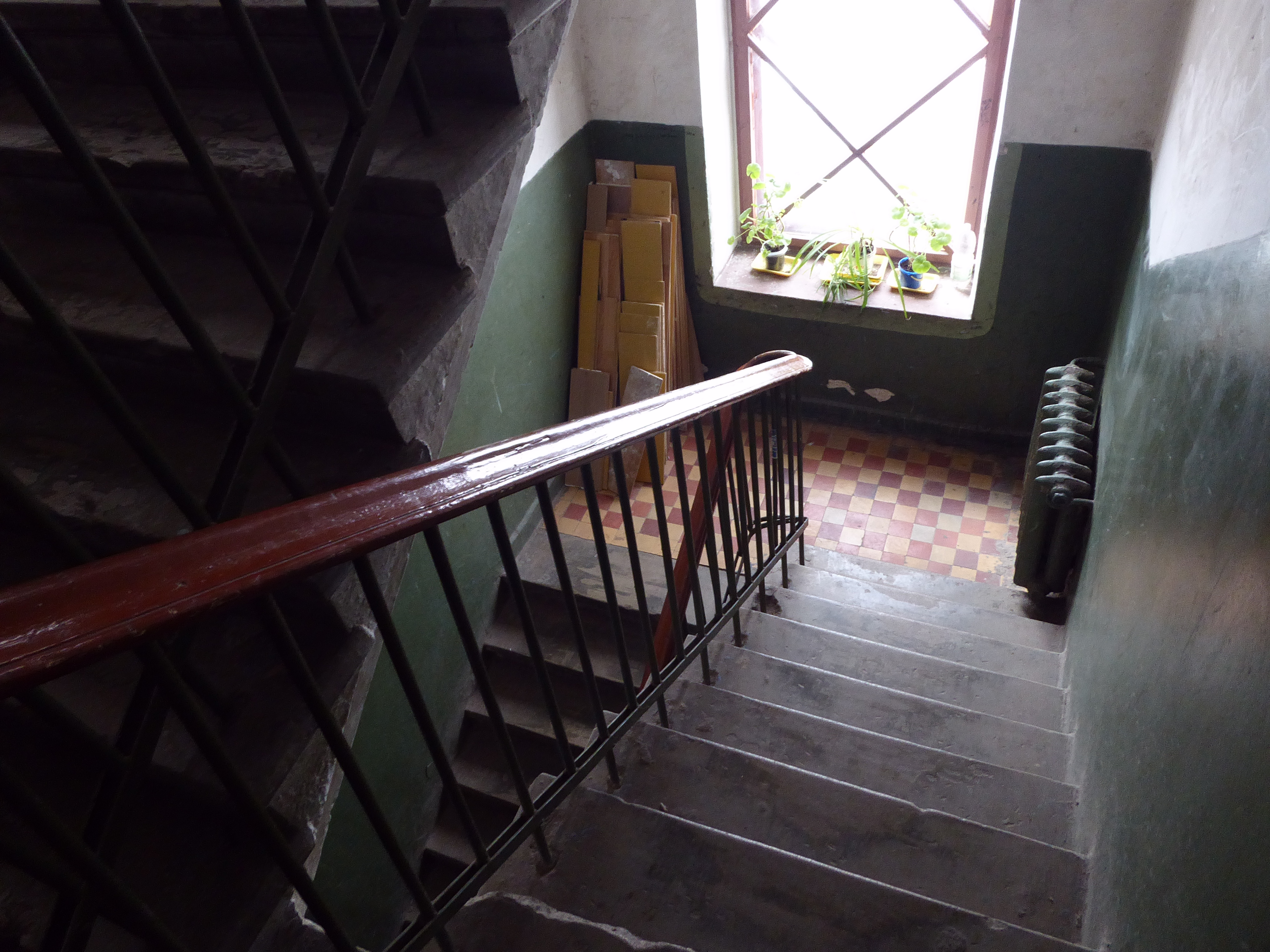
In the more modern apartment blocks, where middle class people lived , there were were escalators, but in the standard Soviet era style apartment block – like the one we stayed in – there are only stairs (I often wondered how the elderly people managed climbing four or five flights of stairs).

A recruitment poster for the armed forces in the main street of Horki – which are overwhelmingly filled with people from rural and outlying areas who are pro-Lukashenko – unlike in the cities where education levels are higher.
Departing Horki proved to be at least as difficult as reaching it.
At the bus station Anya took charge of the purchase of tickets for the simple reason that she had infinitely more patience than me. She stood in a cue and finally reached the counter where she attempted to explain what she wanted; but the woman behind the counter understood none of it, whereupon the people in the cue behind Anya, dressed in some kind regional attire, long coats and strange hats, tried to help. The everyday people in Belarus, despite their serious, even dour, expressions, were consistently helpful and friendly. There was a group discussion and after a lot of gesturing Anya finally made herself understood; in the meantime, seated not far away, I took some photos of this amusing scene and the last shot: Anya turning towards with me holding the tickets in her hand with a big smile on her face:
Victory!
Sometimes the most mundane achievements can seem truly momentous….


 Serious Travel Images