The symphony Finlandia was composed by the famous Finnish composer Sibelius prior to the Second World War, when Finland was invaded by the Russians – and fought them off for 6 months – an act of unbelievable courage from such a small population. I attended the performance of Finlandia by the Rotterdam Philharmonic Orchestra earlier in the year – and how it resonated with the audience with the Russian troops invading The Ukraine.
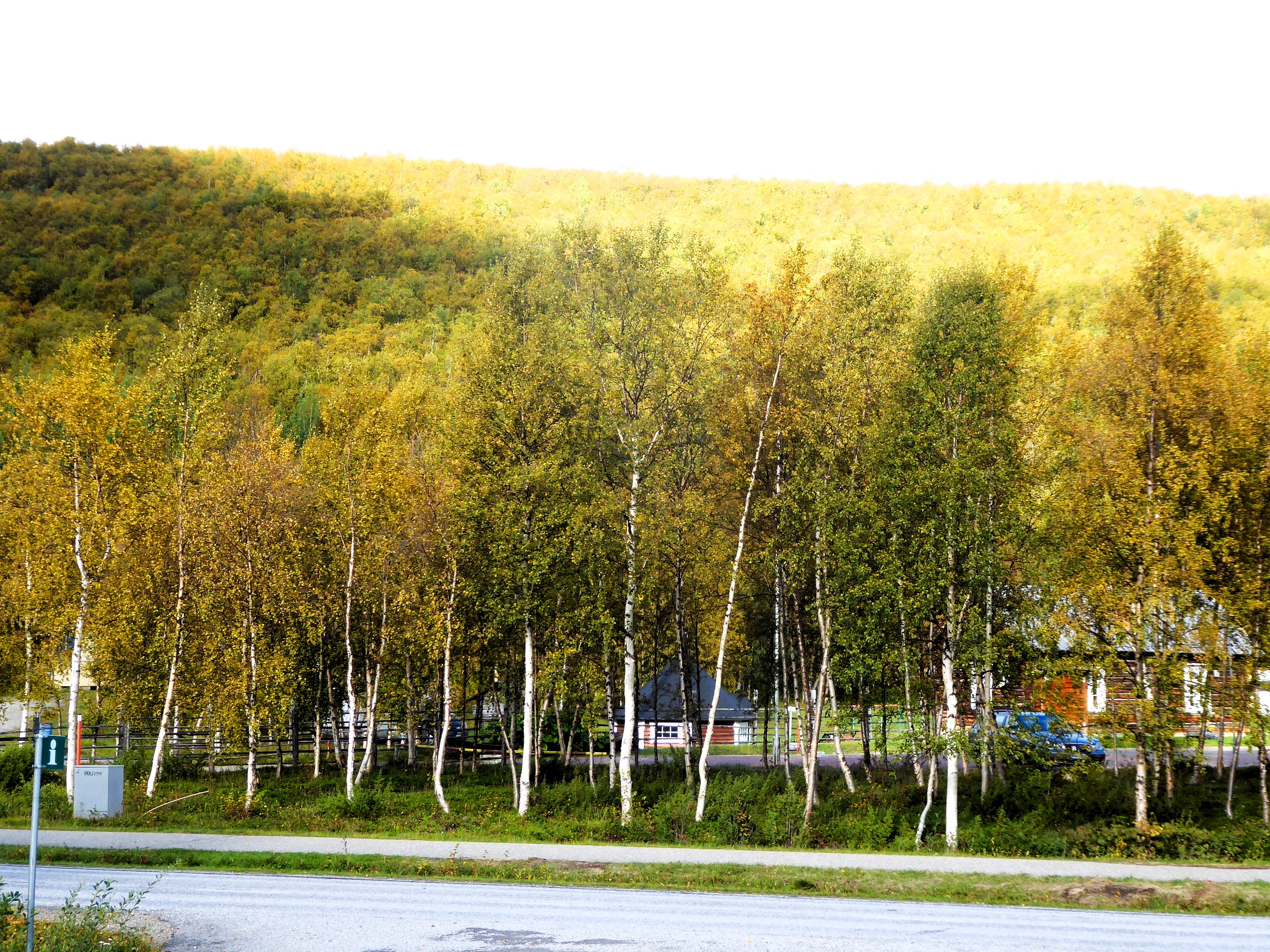
At the very north of Lapland, near the border of Norway, our accomodation was excellent. We stayed in a kind of half-house.


Departing the northern most point of Lapland, we made for a town called Ivalo about 200 kilometres south in a mini-bus.
On the way, the scenery went from sparse hills where only small stunted birch trees could survive to pine forests hugging the edges of the winding road. Then there were the lakes. Looking out the bus window, I seemed to see more lakes than on the journey up to the Norwegian border, many of them quite large; Anya commented in her typical pithy style: ‘that’s because on the way to Utsjoki you slept most of the way’.
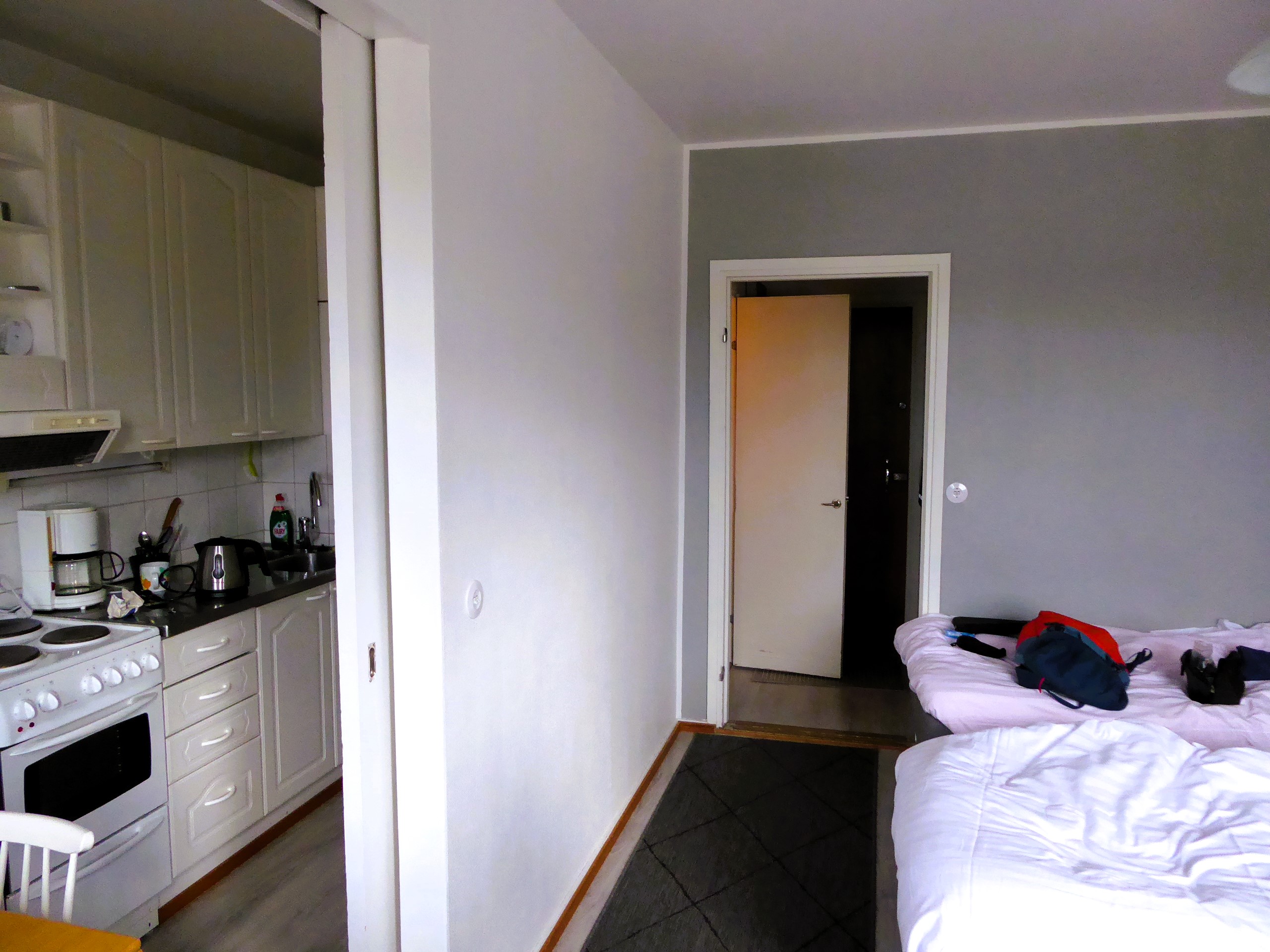
Ivalo was a dull town. That’s true of every town in Lapland, which have no old centres, no old buildings, but Ivalo was much bigger than the other towns we had stayed in and it seemed oppressively sterile. Mind you, the apartment we had booked turned out to be a small, run down, prison-cell sized apartment right on the main road with a great view of traffic and trucks – as well as the noise, especially from the rumbling trucks and the whining two stroke motor bikes. With the windows facing into the sun, none of which could be opened, it was hot and stuffy. The internet didn’t work and there were one power point.
Extremes in accommodation are an inevitable part of travelling especially when like us, you are on a budget and don’t book ahead. This apartment, reminiscent of the communist era apartments in Eastern Europe. It formed a stark contrast indeed with the place we had before: a small house with a large lounge/kitchen with table and chairs and sofas, a separate bedroom with cupboards and bed lamps, and large bathroom – and oh, also a sauna.
And that place was much cheaper than our apartment in Ivalo!

Apartment in Ivalo from outside (ours is with the fan)
With an afternoon to kill we wandered through the backstreets and then through a forest reserve until we ran into ….a lake, another one!
I was actually starting to get bit jaded with lakes. I’d seen so many of them. Large and small. Of every conceivable size and shape.
At one point, I saw a cow. A lone cow on an area of land next to a wooden house near the lake’s edge. It hit me that this was the first cow I’d seen in two weeks and along with this came the realization that in the whole of Lapland, a large area by any standards, there was no organised agriculture of any kind.
Was the land too stony (then again that’s hasn’t been an obstacle for Australian farmers) or was the climate too severe?
Possibly. A more likely explanation was a combination of these factors together with the ubiquity of the lakes. Finland is blessed with more lakes and more water per head of population than any other country in the world and most of those lakes – the 190, 000 of them were south of Lapland, i.e., in the southern provinces, where most of Finland’s small population live, concentrated into modern cities with high rise apartment blocks.
Aesthetically attractive and great for tourism – Finland’s lakes also have a downside. The lakes mean that the availability of land for agriculture is a fraction of Finland’s total land area. Finland has a small population – 6 million – but given its actual useable land area, it’s not able to support a much larger population. Furthermore, given that agriculture is not an option as a major export industry, it makes sense for Finland to concentrate on the high tech sector, which in turn also explains why its education system is one of the best in the world .
Forming an opposite pole to Finland is The Netherlands; in theory, with a small land area than Finland but in reality, even with its heavy population density – one of the highest in the world – it has far more agricultural land at its disposal and far better land: it is one of the world’s biggest food exporters.
Our next bus trip was a part of a longer journey south into ‘Finland’ as opposed to ‘Lapland’. At this point everything was a matter of maps, guide book, booking the next lot of accommodation; of step for step moving further and further south until we would end up back in Helsinki at some unknown point in the future.
Only one thing was certain: where we went, where ever it was going to be many more lakes. Lots and lots of them. I’d better get used to the idea!

We left our dungeon like apartment in Ivalo early in the morning just after sunrise, and walked down the main street to the bus station.
It was cold, 6 degrees Celsius, with a clear sky, and in these last days of August, you could feel the first signs of autumn in this northerly region of the world (one well within the Arctic Circle). The sun, lying at an angle to the horizon, cast long shadows and everything that was illuminated in the flaring light seemed half real and half shadow, more silhouette than real.
From Ivalo to our end destination, Oulu – with a population 200, 000, a large city in Finland – was almost 8 hours on the bus. For that entire journey the scenery out of the window was forests and lakes. It was easy to think of worse scenery – e.g., endless suburbs or factories – yet it was strange, because the forests hugging the sides of the road and the lakes in between, became monotonous, so that when we arrived in Oulu, I felt a sense of relief, even wonder, to find myself walking down streets between high rise apartment buildings and through a busy mall and across an open park.
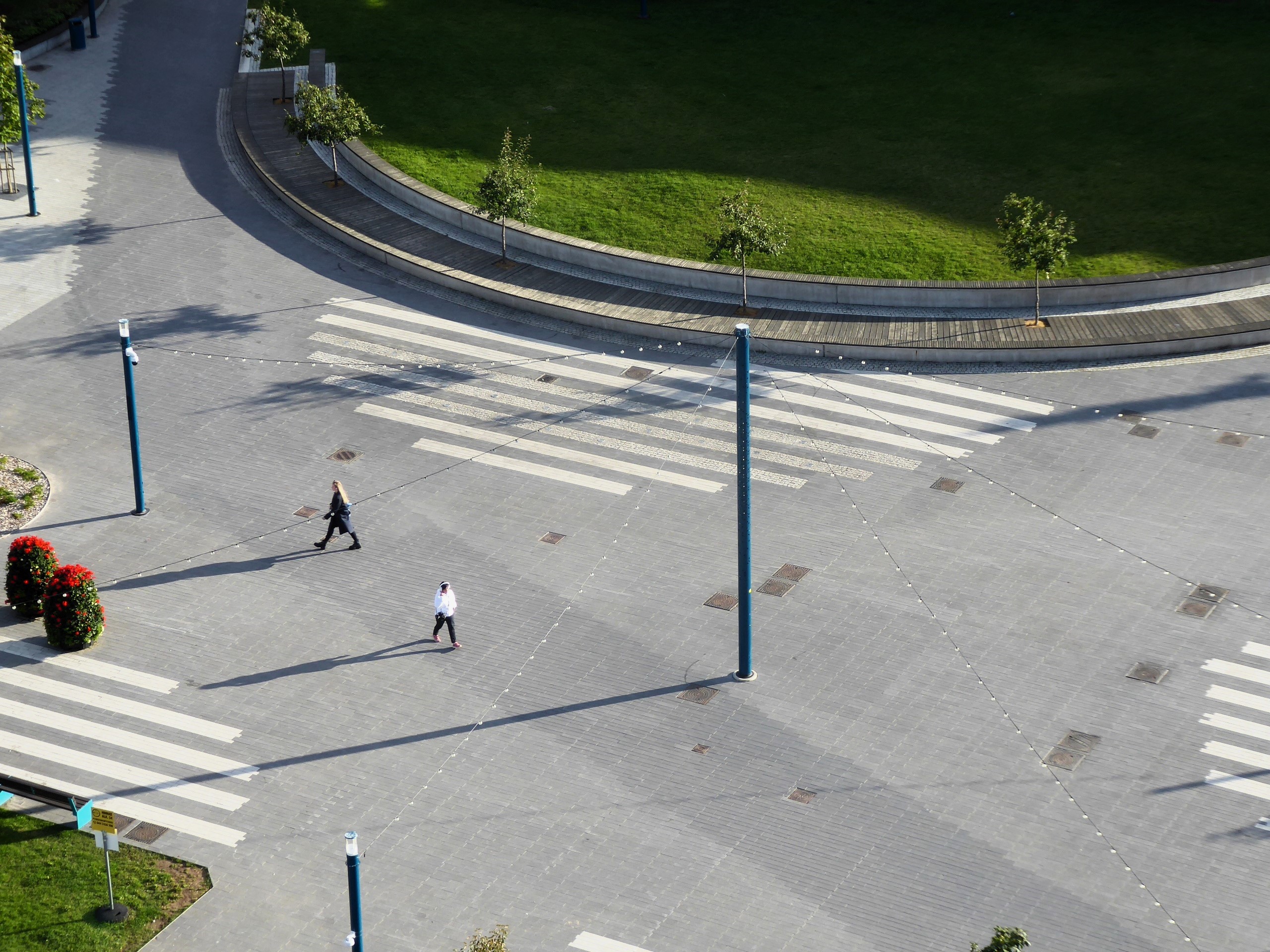
The apartment we booked was on the top story of a modern building – 12 th floor – and from our small balcony was a view of the park below and the urban skyline.


Oulu is a pleasant city, scrupulously clean, with wide open streets and pedestrian crossings. In its centre, where all the shops and stores are located, there are wide malls. It’s a pleasant place, with unusual for Finland, some historic buildings which evidently survived the Second World War. What was most amazing for me was how quiet Fins are – even in a crowded mall, late in the afternoon – they were strangely quiet as if they were whispering to one another. It made a strong impact on me because this was the first time in over two weeks that we had been in a big city and in the company of a crowd. Sometimes I had the feeling I was in the company of ghosts!
It was incredible and actually I like it. I’ve experienced the same thing in Denmark so it seems as if this is a trait of people living in cold northern climes with long freezing winters. The Fins however whilst quiet and reserved are also very friendly and most of them speak surprisingly good English. Another good thing about Oulu: plenty of Indian and Thai restuarants!

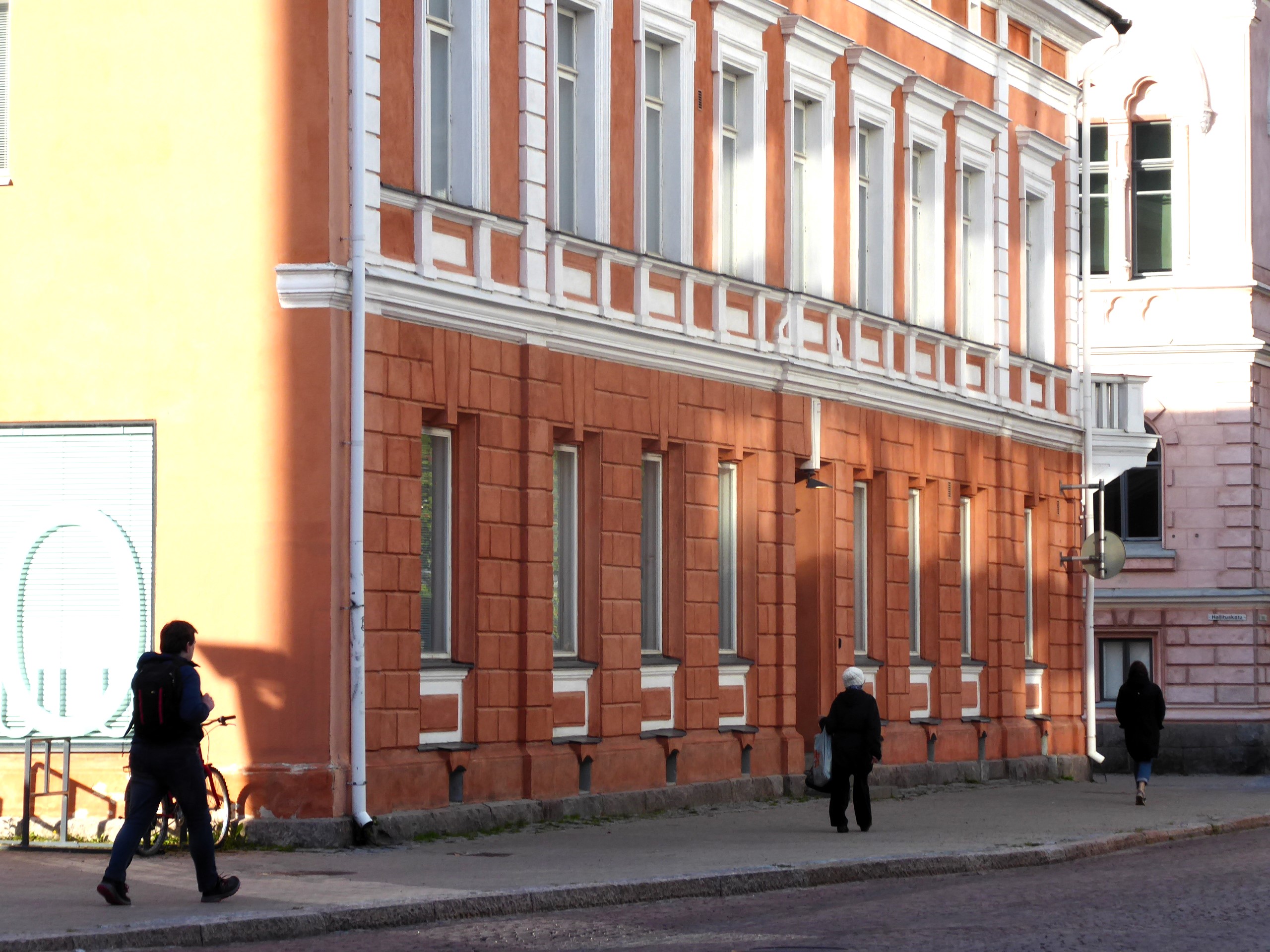
For the next week we travelled along the west coast of Finland – which borders Sweden in the north and further south, the Baltic Sea. It’s the area of the country with the least number of lakes and hence, the most heavily populated by Finish standards. It consists actually of a number of towns interspersed between vast areas of forest.
Some of these towns have old centres and it was these which drew our interest. After two weeks of walking in Lapland, we thought it was high time to visit some of the towns on our way south towards Helsinki and our flight back to Amsterdam. We travelled by bus – and the buses here, often double deckers, are excellent. The so-called historic centres of the towns bordering Sweden were pleasant enough but nothing compared to the historic towns and cities further south in Europe (eg, Netherlands, Belgium, France and Italy).
One town, Rauma, had according to the LP guide ‘the most impressive old centre from all the Nordic countries’. Which suggests that a reason to visit these countries is not to experience history but rather to appreciate the forests and the space and the environment of countries with low population densities – something very rare in today’s overpopulated planet.
The journeys between towns was inevitably with forests hugging both sides of the road. We saw very few farms and the ones we saw were growing crops (especially rye, a staple item here) and hay. My guess is that the animals that are kept in Finland are all inside and probably at the outskirts of the cities.


The ubiquitous forested roads in Finland – this is what you see for hours on end!

The Reindeer Man – he appears on the screen at the front of every intercity bus in Finland. Of course we had no idea what he was advising his clients!
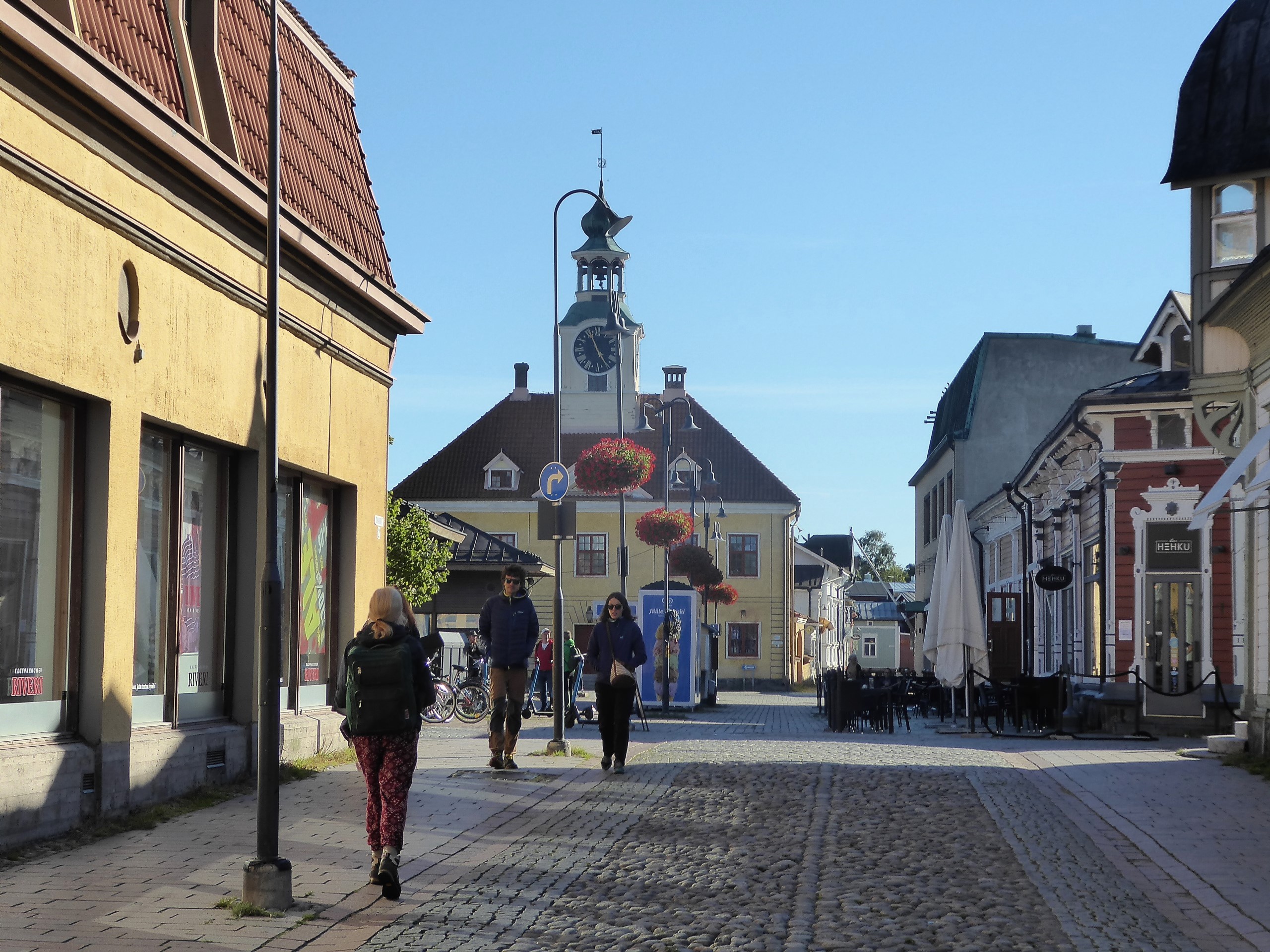


Helsinki

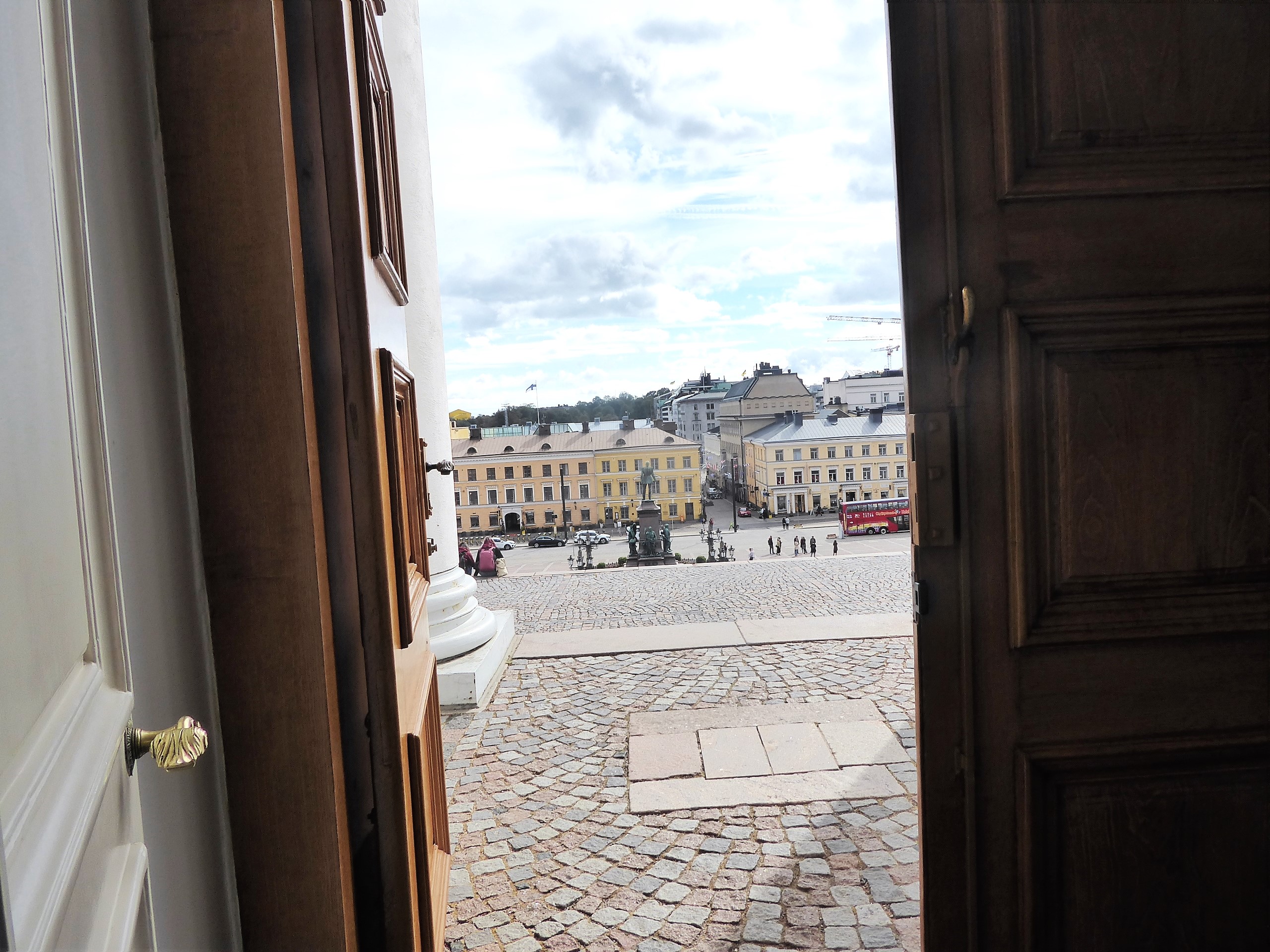
We ended our Finland trip – of about a month – in Helsinki, where we spent two nights renting a small room near the centre. Helsinki is not a star attraction city in terms of historical buildings or grandeur. It certainly has some historic buildings amongst the ultra modern ones.


Helsinki is above all an easy city to move around – to walk the streets and visit cafes and some of the many Indian and Thai restaurants and cafes. It is not a busy city as far as big cities go and we found it no problem to walk around all day. And there are plenty of parks. Being a Finnish city, Helsinki is very civilsed; there are lots of pedestrian crossings and the traffic stops for them including those without lights. And the friendliness and helpfullness of the Fins is another plus point. In more than a few places the Ukrainian flag can be seen, including on top of Helsinki’s main railway station


 Serious Travel Images